Thumb sucking is a common habit among infants and young children. For many babies, sucking on a thumb, finger, or pacifier provides comfort, security, and a sense of relaxation. In fact, thumb sucking is considered a normal developmental behavior during infancy and early childhood.
However, when thumb sucking continues beyond the preschool years, it can begin to affect a child’s teeth, jaw growth, and overall oral development. Parents often wonder whether thumb sucking is harmful, when it becomes a concern, and what steps they should take to prevent future dental problems.
In this article, we’ll explore how thumb sucking affects teeth development, the potential long-term consequences, and effective strategies to help children break the habit.
What Is Thumb Sucking?
Thumb sucking is a natural reflex that often begins before birth. Ultrasound images have even shown babies sucking their thumbs while still in the womb.
Children may suck their thumbs to
- Feel comforted
- Reduce anxiety
- Help them fall asleep
- Cope with stress
- Self-soothe during unfamiliar situations
Most children naturally stop thumb sucking between the ages of 2 and 4.
Is Thumb Sucking Normal?
Yes.
Thumb sucking is generally harmless during infancy and early childhood.
According to pediatric dental experts, thumb sucking typically becomes a concern when:
- Permanent teeth begin to erupt
- The habit is frequent and forceful
- It continues beyond age 4 or 5
The intensity of thumb sucking often matters more than how often it occurs.
How Thumb Sucking Affects Teeth Development
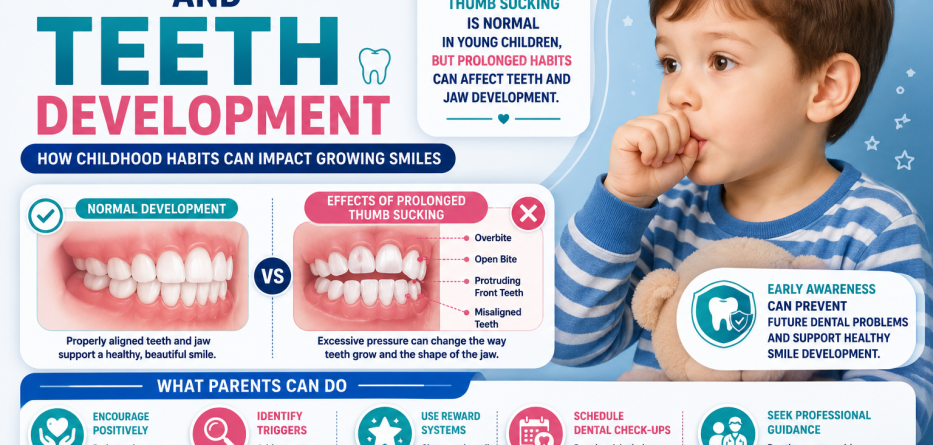
Prolonged thumb sucking places pressure on developing teeth and jaw structures.
Over time, this pressure can alter normal growth patterns and tooth positioning.
Common Dental Effects
- Misaligned teeth
- Bite problems
- Jaw development issues
- Speech difficulties
- Changes in facial growth
The longer the habit continues, the greater the risk of dental complications.
1. Development of an Overbite
One of the most common effects of prolonged thumb sucking is an increased overbite.
An overbite occurs when the upper front teeth protrude significantly beyond the lower front teeth.
Consequences of an Overbite
- Difficulty biting food
- Increased risk of tooth injury
- Cosmetic concerns
- Future orthodontic treatment
2. Open Bite Formation
An open bite occurs when the upper and lower front teeth do not meet when the mouth is closed.
Children with an open bite may struggle to
- Bite properly
- Pronounce certain sounds
- Chew efficiently
Open bites are frequently associated with long-term thumb-sucking habits.
3. Changes in Jaw Development
Persistent thumb sucking can influence the growth of the upper jaw (maxilla).
Possible effects include:
- Narrow upper jaw
- Improper jaw alignment
- Altered facial development
- Increased orthodontic needs
These changes may become more pronounced as a child grows.
4. Tooth Misalignment
Pressure from the thumb can gradually move teeth out of their natural positions.
Common alignment problems include:
- Crowding
- Protruding front teeth
- Spacing issues
- Crossbites
Many children who continue thumb sucking into later childhood eventually require orthodontic treatment.
5. Speech Development Problems
Thumb sucking can contribute to speech difficulties when it affects tooth and jaw positioning.
Potential speech issues include:
- Lisping
- Difficulty pronouncing “S” sounds
- Difficulty pronouncing “TH” sounds
- Articulation challenges
Speech therapy may be recommended in severe cases.
How Long Is Too Long?
Most dental professionals recommend discouraging thumb sucking once a child reaches age 4.
General Guidelines
| Age | Concern Level |
|---|---|
| 0–2 Years | Normal |
| 2–4 Years | Usually harmless |
| 4–5 Years | Monitor closely |
| 5+ Years | Increased dental risk |
Children who stop before permanent teeth emerge often avoid lasting dental problems.
Factors That Influence Dental Damage
Not all thumb-sucking habits affect teeth equally.
Frequency
Children who suck their thumb frequently are at greater risk.
Duration
Long periods of sucking increase pressure on developing teeth.
Intensity
Aggressive thumb sucking creates more force and often causes greater changes in tooth alignment.
Signs That Thumb Sucking Is Affecting Teeth
Parents should watch for:
- Protruding front teeth
- Open bite appearance
- Difficulty closing the mouth completely
- Changes in speech
- Jaw alignment concerns
- Visible tooth movement
Regular dental examinations can identify problems early.
How to Help Your Child Stop Thumb Sucking
Breaking the habit can be challenging, but positive reinforcement is often effective.
Effective Strategies
Praise and Encouragement
Celebrate progress rather than focusing on punishment.
Identify Triggers
Determine whether thumb sucking occurs due to:
- Stress
- Fatigue
- Anxiety
- Boredom
Addressing underlying triggers may help reduce the habit.
Reward Systems
Sticker charts and small rewards often motivate children.
Gentle Reminders
Avoid criticism or punishment, which may increase anxiety and worsen the behavior.
Professional Guidance
A pediatric dentist can provide additional support and treatment options if necessary.
When Should You Consult a Dentist?
Schedule a dental evaluation if:
- Thumb sucking continues beyond age 5
- Permanent teeth are erupting
- Bite changes become noticeable
- Speech problems develop
- Tooth alignment concerns arise
Early intervention can prevent more complex orthodontic issues later.
Can Dental Problems Caused by Thumb Sucking Be Corrected?
In many cases, yes.
Once the habit stops, mild dental changes may improve naturally.
More significant problems may require:
- Orthodontic treatment
- Palatal expanders
- Braces
- Speech therapy
Early treatment often produces the best outcomes.
Preventing Long-Term Dental Issues
Parents can help protect their child’s oral development by:
- Encouraging early habit cessation
- Scheduling regular dental visits
- Monitoring tooth eruption
- Promoting healthy coping strategies
- Seeking professional advice when necessary
Early intervention is key to maintaining healthy dental development.
Frequently Asked Questions
Is thumb sucking bad for teeth?
Thumb sucking is usually harmless in young children but can affect teeth and jaw development if it continues beyond age 4 or 5.
At what age should a child stop thumb-sucking?
Most experts recommend stopping the habit by age 4 to reduce the risk of dental problems.
Can thumb sucking cause crooked teeth?
Yes. Prolonged thumb sucking can contribute to tooth misalignment, overbites, and open bites.
Will my child’s teeth straighten after stopping thumb sucking?
Mild changes may improve naturally, but severe alignment issues may require orthodontic treatment.
Is thumb sucking worse than using a pacifier?
Both habits can affect teeth development if prolonged, but pacifiers are often easier to eliminate because parents can remove them.
Can braces fix thumb-sucking damage?
Yes. Orthodontic treatment can often correct bite and alignment problems caused by prolonged thumb sucking.
Conclusion
Thumb sucking is a normal and comforting behavior for many young children, but prolonged habits can affect teeth development, jaw growth, and speech. Problems such as overbites, open bites, and tooth misalignment become more likely when thumb sucking continues beyond the preschool years.
Fortunately, early intervention, positive reinforcement, and regular dental checkups can help prevent long-term complications. By understanding the relationship between thumb sucking and teeth development, parents can take proactive steps to support their child’s healthy smile and overall oral health.