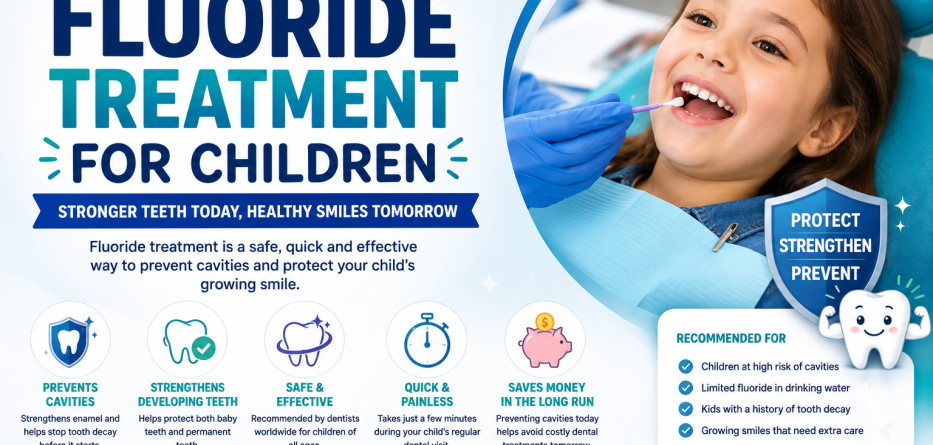
Protecting your child’s teeth from cavities begins long before permanent teeth appear. One of the most effective preventive dental treatments available today is fluoride treatment for children. Recommended by dentists worldwide, fluoride treatments help strengthen tooth enamel, prevent tooth decay, and support long-term oral health.
Children are particularly vulnerable to cavities because their developing teeth are more susceptible to acid attacks from bacteria and sugary foods. Professional fluoride treatments provide an extra layer of protection, helping children maintain strong and healthy smiles as they grow.
In this guide, we’ll explain what fluoride treatment is, how it works, its benefits, safety considerations, and why it plays an important role in pediatric dental care.
What Is Fluoride?
Fluoride is a naturally occurring mineral found in:
- Water
- Soil
- Certain foods
- Toothpaste
- Mouth rinses
For decades, fluoride has been used in dentistry because of its proven ability to strengthen teeth and reduce the risk of cavities.
Quick Definition
Fluoride is a natural mineral that helps strengthen tooth enamel, prevent tooth decay, and repair early stages of enamel damage.
What Is Fluoride Treatment for Children?
Fluoride treatment is a preventive dental procedure in which a highly concentrated fluoride solution is applied directly to a child’s teeth.
Professional fluoride treatments may come in the form of:
- Varnish
- Gel
- Foam
- Rinse
The procedure is quick, painless, and typically completed during a routine dental checkup.
How Does Fluoride Protect Teeth?
Tooth enamel constantly undergoes two processes:
Demineralization
Acids produced by bacteria remove minerals from the enamel.
Remineralization
Minerals such as fluoride help rebuild and strengthen weakened enamel.
Fluoride supports remineralization and makes teeth more resistant to acid attacks.
Benefits include:
- Stronger enamel
- Reduced cavity risk
- Protection against tooth decay
- Repair of early enamel damage
Why Is Fluoride Important for Children?
Children’s teeth are still developing, making them more vulnerable to cavities.
Fluoride helps by:
- Strengthening baby teeth
- Protecting permanent teeth as they emerge
- Reducing future dental problems
- Supporting healthy oral development
According to dental research, fluoride significantly reduces the incidence of cavities in children and adolescents.
Benefits of Fluoride Treatment for Children
1. Prevents Tooth Decay
Fluoride is one of the most effective tools for cavity prevention.
Regular treatments help:
- Reduce plaque damage
- Protect enamel
- Lower the risk of cavities
2. Strengthens Developing Teeth
Children’s teeth continue developing for many years.
Fluoride helps strengthen enamel before and after teeth erupt.
3. Reverses Early Tooth Damage
In some cases, fluoride can help repair early stages of enamel demineralization before cavities fully develop.
4. Saves Future Dental Costs
Preventing cavities can reduce the need for:
- Fillings
- Crowns
- Extractions
- Emergency dental treatment
5. Supports Lifelong Oral Health
Good preventive care during childhood often leads to healthier teeth in adulthood.
When Should Children Start Fluoride Treatments?
Most pediatric dentists recommend fluoride exposure as soon as teeth begin to erupt.
Professional fluoride treatments are commonly recommended during:
- Early childhood
- Preschool years
- School-age years
- Adolescence
The frequency depends on the child’s cavity risk and oral health status.
How Is Fluoride Treatment Applied?
The procedure is simple and painless.
Step 1: Teeth Cleaning
The dentist may clean the teeth before treatment.
Step 2: Fluoride Application
A fluoride varnish, gel, or foam is applied directly to the teeth.
Step 3: Absorption Period
The fluoride remains on the teeth for a short period to maximize effectiveness.
Step 4: Post-Treatment Instructions
Parents may be advised to:
- Avoid eating for a short period
- Delay brushing for several hours
- Follow specific instructions provided by the dentist
The entire process usually takes only a few minutes.
Is Fluoride Treatment Safe for Children?
Yes.
When used appropriately and administered by dental professionals, fluoride treatments are considered safe and effective.
Professional fluoride treatments use carefully controlled amounts of fluoride that are specifically designed for dental use.
Why Dentists Recommend Fluoride
- Extensive scientific research
- Proven cavity prevention
- Decades of safe use
- Endorsement by major dental organizations
Parents should always follow their dentist’s recommendations regarding fluoride use.
Are There Any Side Effects?
Side effects are uncommon.
Some children may temporarily notice:
- Mild taste changes
- Temporary tooth coating appearance (with varnish)
- Slight discoloration immediately after treatment
These effects typically disappear quickly.
Serious complications are extremely rare when treatments are performed properly.
Which Children Benefit Most from Fluoride Treatments?
Children at higher risk of cavities may benefit most.
Risk factors include:
- Frequent sugary snacks
- Poor oral hygiene
- History of cavities
- Orthodontic appliances
- Dry mouth conditions
- Limited fluoride exposure
Your dentist can assess your child’s individual risk level.
Fluoride Treatment vs Fluoride Toothpaste
| Feature | Professional Fluoride Treatment | Fluoride Toothpaste |
|---|---|---|
| Fluoride Concentration | High | Lower |
| Application | Dental Office | Home |
| Frequency | Every Few Months | Daily |
| Purpose | Intensive Protection | Routine Maintenance |
Both are important components of preventive dental care.
Tips for Preventing Cavities in Children
In addition to fluoride treatments:
- Brush twice daily.
- Use fluoride toothpaste.
- Limit sugary snacks and drinks.
- Encourage healthy eating habits.
- Schedule regular dental visits.
- Consider dental sealants if recommended.
- Teach proper brushing techniques.
Combining these habits offers the best protection against tooth decay.
Common Myths About Fluoride
Myth 1: Fluoride Is Unsafe
Fact: Professional fluoride treatments are safe when used as directed by dental professionals.
Myth 2: Baby Teeth Don’t Need Protection
Fact: Healthy baby teeth are important for eating, speaking, and guiding permanent teeth.
Myth 3: Fluoride Is Only for Children with Cavities
Fact: Fluoride helps prevent cavities before they occur.
Myth 4: Fluoride Treatments Are Painful
Fact: Fluoride applications are quick, simple, and completely painless.
Frequently Asked Questions
At what age should children get fluoride treatments?
Many children can begin receiving fluoride treatments once their teeth start erupting, based on their dentist’s recommendation.
How often should fluoride treatments be done?
Most children benefit from treatments every 3 to 12 months, depending on cavity risk.
Is fluoride treatment painful?
No. The procedure is fast, comfortable, and non-invasive.
Can fluoride reverse cavities?
Fluoride can help repair early enamel damage before a cavity fully develops.
How long does fluoride treatment take?
Most applications take only a few minutes during a routine dental visit.
Is fluoride toothpaste enough?
Fluoride toothpaste is important, but professional fluoride treatments provide additional protection for children at higher risk of cavities.
Conclusion
Fluoride treatment for children is one of the safest and most effective ways to prevent tooth decay and strengthen developing teeth. By reinforcing enamel, repairing early damage, and reducing cavity risk, fluoride plays a critical role in maintaining healthy smiles throughout childhood and beyond.
Combined with regular dental visits, proper brushing habits, and a balanced diet, fluoride treatments can help set the foundation for a lifetime of excellent oral health. If you’re unsure whether your child would benefit from fluoride treatment, consult your pediatric dentist for personalized recommendations.