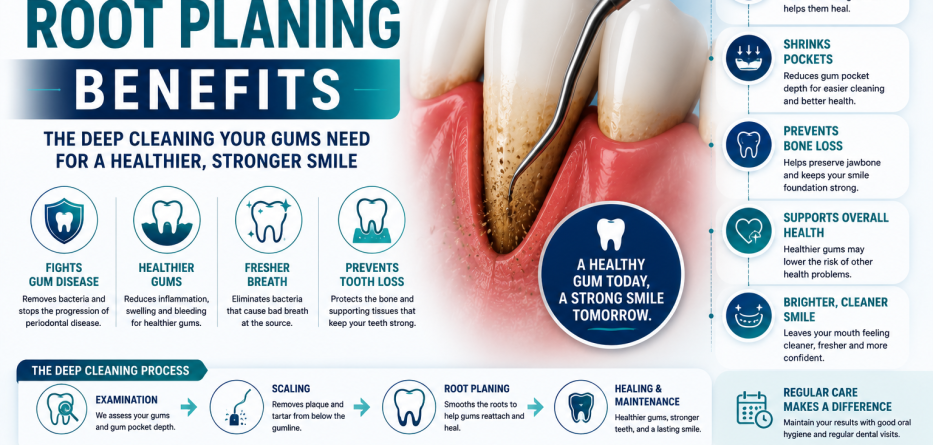
Healthy gums are the foundation of a healthy smile. However, millions of people suffer from gum disease without realizing it. Early stages of periodontal disease often develop silently, causing inflammation and damage beneath the gumline. If left untreated, gum disease can lead to gum recession, bone loss, and even tooth loss.
One of the most effective non-surgical treatments for gum disease is scaling and root planing, commonly known as deep cleaning. This procedure removes harmful plaque and tartar from below the gums and helps restore periodontal health.
In this article, we’ll explore the major benefits of scaling and root planing, how the procedure works, and why dentists recommend it as a critical treatment for gum disease.
What Is Scaling and Root Planing?
Scaling and root planing is a deep cleaning procedure designed to treat periodontal (gum) disease.
The treatment consists of two parts:
Scaling
Scaling removes plaque, tartar, and bacteria from:
- Tooth surfaces
- Gum pockets
- Areas below the gumline
Root Planing
Root planing smooths the tooth roots to:
- Reduce bacterial buildup
- Encourage gum reattachment
- Promote healing
Together, these procedures help eliminate infection and create a healthier environment for the gums.
Why Is Scaling and Root Planing Necessary?
When plaque and tartar accumulate beneath the gums, bacteria begin attacking the surrounding tissues.
This can lead to:
- Gum inflammation
- Bleeding gums
- Bad breath
- Gum recession
- Bone loss
- Tooth mobility
Scaling and root planing addresses these issues before they progress into more serious periodontal problems.
Top Benefits of Scaling and Root Planing
1. Stops the Progression of Gum Disease
One of the biggest benefits of scaling and root planing is its ability to halt periodontal disease in its early and moderate stages.
By removing bacterial deposits below the gumline, the treatment reduces inflammation and prevents further tissue damage.
Benefits include:
- Reduced infection
- Healthier gums
- Lower risk of advanced periodontal disease
2. Reduces Gum Inflammation
Inflamed gums are often red, swollen, and tender.
After scaling and root planing:
- Swelling decreases
- Redness improves
- Gum tissues become healthier
Many patients notice significant improvement within a few weeks.
3. Helps Prevent Tooth Loss
Advanced gum disease is one of the leading causes of tooth loss in adults.
By treating infection early, scaling and root planing help preserve:
- Gum tissue
- Jawbone support
- Natural teeth
Protecting your natural teeth is one of the most valuable benefits of periodontal treatment.
4. Improves Gum Reattachment
As bacteria accumulate beneath the gums, pockets begin forming around the teeth.
Root planing smooths root surfaces, allowing gum tissue to reattach more effectively.
Benefits include:
- Shallower gum pockets
- Improved stability
- Better periodontal health
5. Eliminates Bad Breath
Persistent bad breath is often caused by bacteria trapped beneath the gumline.
Scaling and root planing remove these bacteria, helping
- Freshen breath
- Improve oral hygiene
- Reduce unpleasant odors
Many patients experience noticeable improvement immediately after treatment.
6. Reduces Gum Pocket Depth
Healthy gums fit snugly around the teeth.
Periodontal disease creates deeper pockets that harbor bacteria.
Deep cleaning helps:
- Shrink periodontal pockets
- Improve cleaning access
- Reduce future bacterial growth
Smaller pockets make long-term maintenance easier.
7. Supports Better Overall Health
Research has linked gum disease to several systemic health conditions.
Studies suggest associations between periodontal disease and:
- Heart disease
- Diabetes
- Stroke
- Respiratory infections
Reducing oral inflammation may contribute to improved overall health.
8. Prevents Bone Loss
Periodontal bacteria can gradually destroy the bone supporting your teeth.
Scaling and root planing helps reduce bacterial activity and slow bone deterioration.
Benefits include:
- Better tooth support
- Improved long-term oral health
- Reduced risk of tooth mobility
9. Avoids More Invasive Treatments
Early intervention often eliminates the need for advanced periodontal procedures.
Without treatment, patients may eventually require the following:
- Gum surgery
- Bone grafting
- Tooth extractions
- Dental implants
Deep cleaning is a conservative approach that may prevent costly future treatments.
10. Improves Smile Appearance
Healthy gums enhance the appearance of your smile.
After treatment, patients often notice:
- Less redness
- Reduced swelling
- Healthier gum contours
- Cleaner-looking teeth
The result is a more attractive and healthier smile.
What Happens During Scaling and Root Planing?
The procedure is typically completed over one or more appointments.
Step 1: Examination
The dentist or periodontist evaluates:
- Gum pocket depth
- Bone loss
- Signs of infection
Step 2: Local Anesthesia
The treatment area is numbed for comfort.
Step 3: Scaling
Special instruments remove plaque and tartar deposits from below the gums.
Step 4: Root Planing
The root surfaces are smoothed to discourage future bacterial attachment.
Step 5: Follow-Up Care
The dentist monitors healing and recommends maintenance visits.
Recovery After Scaling and Root Planing
Most patients recover quickly.
Common temporary symptoms include:
- Mild soreness
- Gum sensitivity
- Minor bleeding
- Temperature sensitivity
Recovery tips:
- Brush gently
- Use prescribed mouthwash
- Avoid tobacco products
- Follow your dentist’s instructions
Most discomfort resolves within a few days.
Who Needs Scaling and Root Planing?
Your dentist may recommend deep cleaning if you have the following:
- Bleeding gums
- Persistent bad breath
- Gum pockets deeper than 4 mm
- Gum recession
- Early to moderate periodontal disease
Regular dental examinations help identify these problems early.
Scaling and Root Planing vs Regular Dental Cleaning
| Feature | Regular Cleaning | Scaling & Root Planing |
|---|---|---|
| Removes Surface Plaque | Yes | Yes |
| Removes Tartar Below Gums | Limited | Yes |
| Treats Gum Disease | No | Yes |
| Root Surface Smoothing | No | Yes |
| Deep Gum Pocket Treatment | No | Yes |
Scaling and root planing is specifically designed for patients with periodontal disease.
Frequently Asked Questions
Is scaling and root planing painful?
Most patients experience minimal discomfort because local anesthesia is used during treatment.
How long does scaling and root planing take?
Treatment time depends on the severity of gum disease and the number of areas requiring treatment.
Can scaling and root planing cure gum disease?
It can effectively control and manage early to moderate periodontal disease, especially when combined with good oral hygiene.
How often is scaling and root planing needed?
Many patients only require it once, followed by periodontal maintenance appointments.
How soon will I notice results?
Most patients notice reduced bleeding, fresher breath, and healthier gums within a few weeks.
Conclusion
Scaling and root planing is one of the most effective non-surgical treatments for gum disease. By removing harmful bacteria, plaque, and tartar from below the gumline, it helps stop disease progression, reduce inflammation, prevent tooth loss, and improve overall oral health.
If you’re experiencing signs of gum disease such as bleeding gums, bad breath, or gum recession, early treatment can make a significant difference. Investing in scaling and root planing today can help protect your smile, preserve your teeth, and support long-term oral health for years to come.