Most people think of gum disease as an oral health problem that only affects the teeth and gums. However, research has revealed that gum disease can have a much broader impact on the body. In fact, the health of your gums may be closely connected to your overall health and well-being.
Gum disease, also known as periodontal disease, is a chronic inflammatory condition caused by bacterial infection of the gums. If left untreated, it can lead to tooth loss, bone damage, and even increase the risk of several serious health conditions.
Understanding the relationship between gum disease and overall health can help you take proactive steps to protect both your smile and your body.
What Is Gum Disease?
Gum disease is an infection of the tissues that support the teeth.
It develops when plaque and bacteria accumulate along the gumline.
Stages of Gum Disease
1. Gingivitis
The earliest stage of gum disease.
Symptoms include:
- Red gums
- Swollen gums
- Bleeding during brushing or flossing
- Bad breath
At this stage, gum disease is usually reversible with proper treatment.
2. Periodontitis
If gingivitis is not treated, it can progress into periodontitis.
This advanced stage may cause:
- Gum recession
- Bone loss
- Loose teeth
- Tooth loss
Periodontitis requires professional dental treatment to manage.
How Gum Disease Affects the Body
The mouth serves as a gateway to the rest of the body.
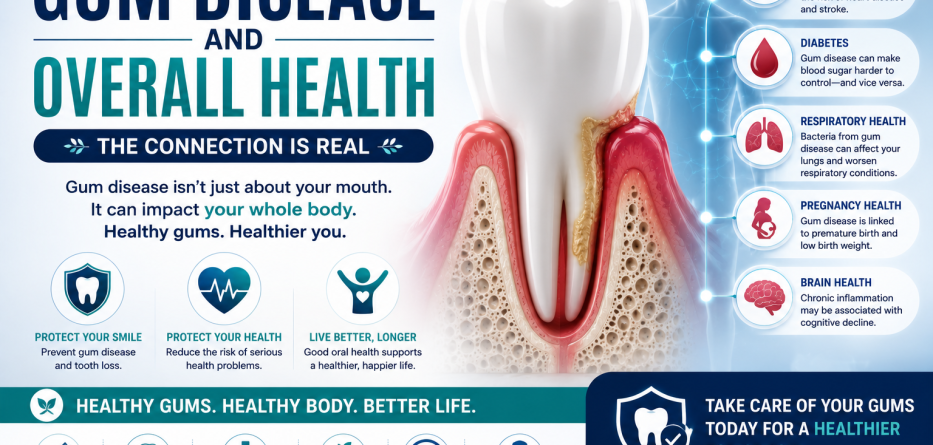
When harmful bacteria enter the bloodstream through infected gum tissue, they can trigger inflammation in other areas.
The Role of Inflammation
Chronic inflammation is linked to numerous health conditions.
Inflamed gums release inflammatory chemicals that may contribute to:
- Cardiovascular disease
- Diabetes complications
- Respiratory infections
- Pregnancy complications
This is why maintaining healthy gums is an important part of overall health.
Gum Disease and Heart Disease
One of the most studied connections is between periodontal disease and heart health.
Research suggests that bacteria from infected gums may enter the bloodstream and contribute to inflammation in blood vessels.
Potential effects include the following:
- Increased risk of heart disease
- Narrowed arteries
- Higher risk of stroke
- Increased cardiovascular inflammation
While gum disease does not directly cause heart disease, it may increase risk factors associated with cardiovascular conditions.
Gum Disease and Diabetes
The relationship between diabetes and gum disease is bidirectional.
How Diabetes Affects Gum Health
People with diabetes are more susceptible to infections, including gum disease.
High blood sugar levels can:
- Increase bacterial growth
- Slow healing
- Increase inflammation
How Gum Disease Affects Diabetes
Severe gum disease can make blood sugar levels harder to control.
This creates a cycle where:
- Diabetes worsens gum disease
- Gum disease worsens diabetes management
Proper oral care is especially important for diabetic patients.
Gum Disease and Respiratory Health
Bacteria from the mouth can sometimes be inhaled into the lungs.
This may increase the risk of:
- Pneumonia
- Respiratory infections
- Chronic obstructive pulmonary disease (COPD) complications
Older adults and individuals with weakened immune systems may be particularly vulnerable.
Gum Disease and Pregnancy
Pregnant women should pay close attention to gum health.
Research has associated severe gum disease with:
- Premature birth
- Low birth weight
- Pregnancy complications
Hormonal changes during pregnancy can also increase gum sensitivity and inflammation.
Regular dental visits during pregnancy can help reduce risks.
Gum Disease and Cognitive Health
Emerging research suggests a possible link between chronic inflammation from periodontal disease and cognitive decline.
Studies are investigating connections between gum disease and:
- Memory problems
- Dementia
- Alzheimer’s disease
Although more research is needed, maintaining good oral health may support long-term brain health.
Common Symptoms of Gum Disease
Many people do not realize they have gum disease until significant damage has occurred.
Warning signs include:
- Bleeding gums
- Persistent bad breath
- Red or swollen gums
- Gum recession
- Tooth sensitivity
- Loose teeth
- Pain while chewing
Early diagnosis improves treatment outcomes.
Who Is at Higher Risk?
Several factors increase the likelihood of developing gum disease.
Major Risk Factors
- Poor oral hygiene
- Smoking
- Diabetes
- Family history
- Hormonal changes
- Stress
- Certain medications
- Weakened immune system
Understanding these risk factors allows for earlier prevention and intervention.
How to Prevent Gum Disease
Preventive care is the best defense against periodontal disease.
Daily Oral Hygiene
- Brush twice daily
- Floss once daily
- Use antimicrobial mouthwash if recommended
Professional Dental Care
- Schedule regular cleanings
- Attend routine dental examinations
- Follow professional treatment recommendations
Healthy Lifestyle Choices
- Eat a balanced diet
- Avoid smoking
- Manage chronic health conditions
- Stay hydrated
These habits support both oral and overall health.
Treatment Options for Gum Disease
Treatment depends on the severity of the condition.
Early-Stage Treatment
- Professional dental cleaning
- Improved home care
- Antibacterial rinses
Advanced Treatment
- Scaling and root planing
- Periodontal therapy
- Laser treatment
- Gum surgery
- Bone grafting procedures
Prompt treatment helps preserve teeth and reduce systemic health risks.
Benefits of Healthy Gums
Maintaining healthy gums offers numerous advantages.
Oral Health Benefits
- Stronger teeth
- Reduced tooth loss risk
- Fresher breath
- Improved comfort
Overall Health Benefits
- Lower inflammation
- Better diabetes management
- Improved cardiovascular health
- Reduced infection risk
Healthy gums contribute to a healthier body.
Frequently Asked Questions
Can gum disease affect overall health?
Yes. Research has linked gum disease to several health conditions, including heart disease, diabetes, respiratory issues, and pregnancy complications.
Is gum disease reversible?
Gingivitis, the earliest stage, is usually reversible. Advanced periodontitis can be managed but not completely reversed.
Can gum disease cause heart problems?
While it does not directly cause heart disease, gum disease may contribute to inflammation associated with cardiovascular conditions.
How do I know if I have gum disease?
Common signs include bleeding gums, swelling, bad breath, gum recession, and loose teeth.
Can treating gum disease improve overall health?
Treating gum disease may help reduce inflammation and support better management of certain systemic health conditions.
Conclusion
The connection between gum disease and overall health is stronger than many people realize. What begins as a localized infection in the gums can potentially influence other areas of the body through inflammation and bacterial spread.
By practicing good oral hygiene, scheduling regular dental visits, and addressing gum problems early, you can protect not only your smile but also your long-term health. Healthy gums are an essential part of a healthy life, making periodontal care one of the most important investments you can make in your overall well-being.