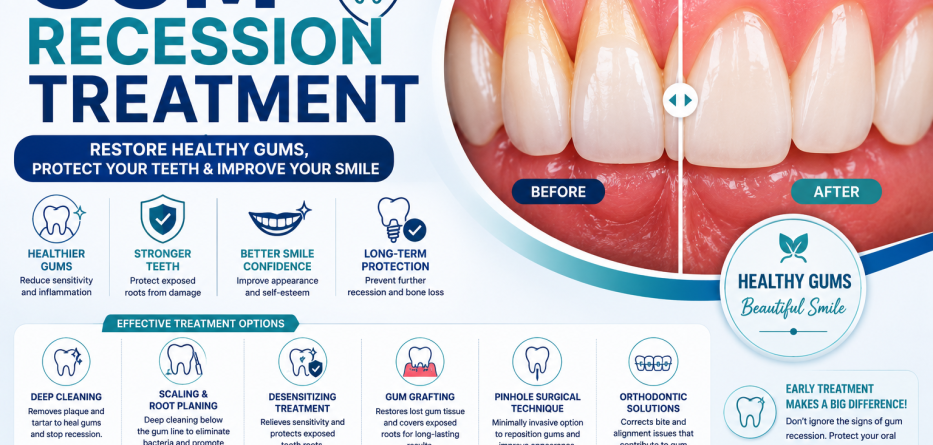
Gum recession is a common dental condition that affects millions of people worldwide. It occurs when the gum tissue surrounding the teeth gradually pulls back or wears away, exposing more of the tooth or even its root. While gum recession may seem like a cosmetic issue at first, it can lead to serious oral health problems if left untreated.
Exposed tooth roots can increase sensitivity, make teeth more vulnerable to decay, and even contribute to tooth loss in severe cases. Fortunately, modern dentistry offers several effective gum recession treatments that can restore gum health, improve appearance, and protect your teeth.
In this guide, you’ll learn what causes gum recession, how to recognize the symptoms, and the most effective treatment options available today.
What Is Gum Recession?
Gum recession is the gradual loss of gum tissue around the teeth, causing the gum line to move downward (or upward for upper teeth) and expose the tooth roots.
Healthy gums fit snugly around the teeth and protect the underlying bone and roots. When gum tissue recedes, gaps may form between the gums and teeth, creating areas where bacteria can accumulate.
Quick Definition
Gum recession is a condition where gum tissue pulls away from the teeth, exposing the tooth roots and increasing the risk of sensitivity, decay, and periodontal disease.
Signs and Symptoms of Gum Recession
Early detection can help prevent complications.
Common symptoms include:
- Tooth sensitivity to hot or cold foods
- Teeth appearing longer than normal
- Visible tooth roots
- Swollen or inflamed gums
- Bleeding during brushing or flossing
- Loose teeth
- Bad breath
- Notches near the gum line
If you notice these symptoms, it’s important to seek dental evaluation promptly.
What Causes Gum Recession?
Several factors can contribute to gum recession.
1. Gum Disease
Periodontal disease is one of the leading causes of gum recession.
Bacterial infections can destroy the following:
- Gum tissue
- Bone support
- Periodontal ligaments
Without treatment, gums may gradually pull away from the teeth.
2. Aggressive Brushing
Brushing too hard or using a hard-bristled toothbrush can wear away gum tissue over time.
Dentists generally recommend:
- Soft-bristled toothbrushes
- Gentle circular motions
- Proper brushing technique
3. Poor Oral Hygiene
Inadequate brushing and flossing can lead to plaque and tartar buildup, increasing the risk of gum disease and recession.
4. Teeth Grinding (Bruxism)
Excessive pressure from grinding or clenching can stress both teeth and gums, contributing to recession.
5. Tobacco Use
Smoking and other tobacco products reduce blood flow to gum tissue and increase the risk of periodontal disease.
6. Genetics
Some individuals are naturally more susceptible to gum recession regardless of their oral hygiene habits.
7. Misaligned Teeth
Teeth that are improperly positioned may place excessive pressure on the gums and surrounding bone.
Why Is Gum Recession a Problem?
Many people ignore gum recession until symptoms become severe.
Untreated gum recession can lead to:
- Increased tooth sensitivity
- Root decay
- Gum infections
- Bone loss
- Loose teeth
- Tooth loss
- Cosmetic concerns
Early treatment can help prevent these complications.
How Is Gum Recession Diagnosed?
A dentist or periodontist will perform a comprehensive examination.
Diagnostic tools may include:
- Visual examination
- Periodontal probing
- Digital X-rays
- Bone level assessment
The severity of recession helps determine the most appropriate treatment plan.
Gum Recession Treatment Options
The best treatment depends on the cause and severity of the condition.
1. Professional Dental Cleaning
For mild gum recession caused by plaque buildup or early gum disease, professional cleaning may be sufficient.
Benefits include:
- Removal of plaque and tartar
- Reduced inflammation
- Improved gum health
- Prevention of further recession
2. Scaling and Root Planing
Often called deep cleaning, scaling and root planing is commonly used for patients with periodontal disease.
Procedure Includes:
- Removing bacteria beneath the gum line
- Smoothing root surfaces
- Promoting gum reattachment
This treatment can slow disease progression and improve gum health.
3. Desensitizing Treatments
If exposed roots cause discomfort, dentists may recommend the following:
- Fluoride treatments
- Desensitizing toothpaste
- Dental bonding
These treatments help reduce sensitivity and protect exposed areas.
4. Gum Grafting Surgery
Gum grafting is one of the most effective treatments for moderate to severe gum recession.
What Is a Gum Graft?
A periodontist takes healthy tissue, often from the roof of the mouth or a donor source, and places it over the exposed root surface.
Benefits
- Covers exposed roots
- Reduces sensitivity
- Improves appearance
- Protects against further recession
Gum grafting is considered the gold standard for advanced recession cases.
5. Pinhole Surgical Technique (PST)
The pinhole surgical technique is a minimally invasive alternative to traditional gum grafting.
Advantages
- No scalpels
- No sutures
- Faster recovery
- Less discomfort
Not all patients are candidates, but it can be an effective option for certain cases.
6. Orthodontic Treatment
When misaligned teeth contribute to gum recession, orthodontic treatment may help.
Options include:
- Clear aligners
- Traditional braces
Proper tooth positioning can reduce stress on gum tissue.
How to Prevent Gum Recession
Prevention is always better than treatment.
Protect Your Gums by:
- Brushing gently twice daily
- Using a soft-bristled toothbrush
- Flossing every day
- Attending regular dental checkups
- Treating gum disease early
- Avoiding tobacco products
- Wearing a nightguard if you grind your teeth
Healthy habits can significantly reduce your risk.
Gum Recession Treatment Comparison
| Treatment | Best For | Invasiveness |
|---|---|---|
| Professional Cleaning | Mild Cases | Low |
| Scaling & Root Planing | Gum Disease | Low |
| Desensitizing Therapy | Sensitivity | Very Low |
| Gum Grafting | Moderate to Severe Cases | Moderate |
| Pinhole Technique | Select Cases | Low to Moderate |
| Orthodontics | Bite Issues | Moderate |
Frequently Asked Questions
Can gum recession grow back naturally?
Unfortunately, lost gum tissue does not typically regenerate on its own. Professional treatment is often required.
What is the best treatment for gum recession?
Gum grafting is generally considered the most effective treatment for moderate to severe recession.
Is gum recession reversible?
The underlying cause can often be controlled, but lost gum tissue usually requires treatment to restore coverage.
Does gum graft surgery hurt?
Most patients experience mild discomfort that can be managed with medication and proper aftercare.
How much does gum recession treatment cost?
Costs vary depending on treatment type, severity, and geographic location.
Can gum recession cause tooth loss?
Yes. Severe untreated recession can weaken support structures and increase the risk of tooth loss.
Conclusion
Gum recession is more than just a cosmetic concern—it can significantly impact your oral health if left untreated. Whether caused by gum disease, aggressive brushing, teeth grinding, or genetics, early diagnosis and treatment are essential for protecting your teeth and gums.
Modern gum recession treatments such as professional cleanings, scaling and root planing, gum grafting, and minimally invasive procedures can effectively restore gum health and prevent further damage. If you notice signs of gum recession, consulting a dental professional as soon as possible can help preserve your smile and prevent future complications.