

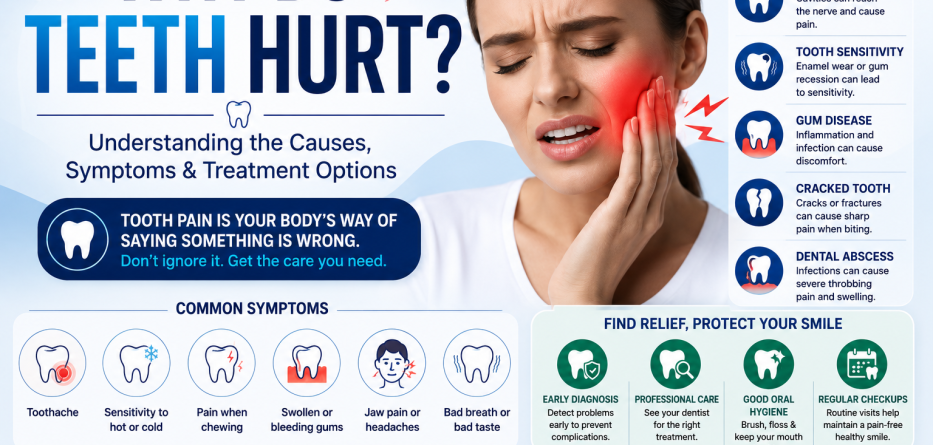
Tooth pain can range from a mild annoyance to a severe, throbbing ache that affects your ability to eat, sleep, and concentrate. Whether it’s a sudden sharp pain when drinking something cold or persistent discomfort that won’t go away, tooth pain is your body’s way of signaling that something may be wrong.
Understanding why teeth hurt is the first step toward finding relief and protecting your oral health. While some causes are minor and temporary, others may require immediate dental treatment to prevent complications.
In this article, we’ll explore the most common reasons for tooth pain, associated symptoms, available treatments, and when it’s time to see a dentist.
Why Do Teeth Hurt?
Quick Answer
Teeth hurt when the sensitive nerves inside the tooth become irritated, inflamed, or exposed. This can happen due to tooth decay, infections, gum disease, tooth sensitivity, cracked teeth, grinding, or other dental conditions.
To understand tooth pain, it’s helpful to know a little about tooth anatomy.
Understanding Tooth Structure
Each tooth contains several layers:
Enamel
The hard outer layer that protects the tooth.
Dentin
The layer beneath the enamel that contains microscopic tubules connected to nerves.
Pulp
The innermost part of the tooth containing nerves and blood vessels.
When enamel wears away or damage occurs, external stimuli can reach the nerves and cause pain.
1. Tooth Decay (Cavities)
One of the most common reasons teeth hurt is tooth decay.
Bacteria in the mouth produce acids that gradually erode enamel and create cavities.
Symptoms
- Toothache
- Sensitivity to sweets
- Pain when chewing
- Visible holes in teeth
Treatment
- Dental fillings
- Crowns
- Root canal therapy for advanced decay
Early treatment can prevent more serious complications.
2. Tooth Sensitivity
Many people experience discomfort when consuming hot, cold, sweet, or acidic foods.
Causes
- Worn enamel
- Gum recession
- Aggressive brushing
- Teeth whitening treatments
Symptoms
- Sharp, temporary pain
- Sensitivity to temperature changes
Treatment
- Desensitizing toothpaste
- Fluoride treatments
- Dental bonding
- Gum grafting in severe cases
3. Gum Disease
Gum disease affects the tissues supporting the teeth.
As gums recede, tooth roots become exposed, leading to increased sensitivity and pain.
Symptoms
- Red gums
- Swollen gums
- Bleeding while brushing
- Persistent bad breath
- Loose teeth
Treatment
- Professional dental cleanings
- Scaling and root planing
- Improved oral hygiene
4. Cracked or Fractured Teeth
Small cracks may not always be visible but can cause significant discomfort.
Symptoms
- Sharp pain when biting
- Sensitivity to hot and cold
- Intermittent tooth pain
Causes
- Trauma
- Teeth grinding
- Chewing hard foods
Treatment
- Dental bonding
- Crowns
- Root canal therapy
- Tooth extraction in severe cases
5. Dental Abscess
A dental abscess is a serious infection that develops inside a tooth or surrounding gum tissue.
Symptoms
- Severe throbbing pain
- Swelling
- Fever
- Bad taste in the mouth
- Facial swelling
Treatment
- Antibiotics
- Root canal treatment
- Drainage of infection
- Tooth extraction if necessary
A dental abscess requires prompt professional care.
6. Teeth Grinding (Bruxism)
Many people grind or clench their teeth during sleep without realizing it.
Symptoms
- Jaw pain
- Headaches
- Tooth sensitivity
- Worn teeth
Treatment
- Nightguards
- Stress management
- Bite adjustments
Untreated bruxism can lead to significant tooth damage.
7. Wisdom Teeth Problems
Wisdom teeth often cause pain when they become impacted or partially erupt.
Symptoms
- Pain at the back of the mouth
- Swollen gums
- Difficulty opening the mouth
- Jaw discomfort
Treatment
- Monitoring
- Professional cleaning
- Wisdom tooth extraction
8. Sinus Infections
Sometimes tooth pain isn’t caused by a dental problem at all.
The roots of upper teeth are located close to the sinus cavities.
Symptoms
- Pressure around cheeks and eyes
- Congestion
- Pain in upper teeth
Treatment
Treating the underlying sinus infection usually resolves the discomfort.
9. Loose or Damaged Fillings
Old dental restorations can wear out over time.
Symptoms
- Sharp pain when biting
- Sensitivity
- Food getting trapped
Treatment
- Filling replacement
- Crown placement
Regular dental checkups help identify failing restorations early.
10. Eruption of New Teeth
Children and teenagers may experience discomfort when new teeth emerge.
Symptoms
- Tender gums
- Mild pain
- Swelling
Treatment
- Cold compresses
- Over-the-counter pain relief
- Proper oral hygiene
Common Symptoms That Accompany Tooth Pain
Tooth pain may occur alongside the following:
- Swelling
- Sensitivity
- Bleeding gums
- Bad breath
- Jaw pain
- Fever
- Difficulty chewing
The type of pain often provides clues about the underlying cause.
When Should You See a Dentist?
Seek professional care if you experience:
- Persistent tooth pain
- Severe pain
- Facial swelling
- Fever
- Pus around the gums
- Pain lasting more than two days
Ignoring tooth pain can allow dental problems to worsen.
How Dentists Diagnose Tooth Pain
A dentist may use:
- Visual examination
- Dental X-rays
- Bite evaluation
- Sensitivity testing
- Periodontal assessment
Accurate diagnosis helps determine the most effective treatment.
How to Prevent Tooth Pain
Good oral care can significantly reduce the risk of dental problems.
Prevention Tips
- Brush twice daily.
- Floss every day.
- Use fluoride toothpaste.
- Limit sugary foods and drinks.
- Wear a mouthguard during sports.
- Attend regular dental checkups.
- Treat dental problems early.
Prevention is often easier and less expensive than treatment.
Frequently Asked Questions
Why does my tooth hurt when I drink something cold?
Cold sensitivity often occurs when enamel wears away or gums recede, exposing sensitive dentin.
Can a toothache go away on its own?
Some mild discomfort may improve temporarily, but persistent pain should be evaluated by a dentist.
What is the most common cause of tooth pain?
Tooth decay is one of the leading causes of tooth pain worldwide.
Can stress cause tooth pain?
Yes. Stress can contribute to teeth grinding, which may cause pain and sensitivity.
Is tooth pain always a sign of a cavity?
No. Tooth pain can result from gum disease, cracked teeth, infections, grinding, sinus issues, and other conditions.
When is tooth pain an emergency?
Severe pain accompanied by swelling, fever, or difficulty swallowing should be treated as a dental emergency.
Conclusion
If you’ve ever wondered, “Why do teeth hurt?” the answer can vary depending on the underlying cause. Tooth pain may result from cavities, gum disease, infections, cracked teeth, grinding, or even sinus problems. While some causes are relatively minor, others require prompt professional treatment to prevent serious complications.
The best way to protect your smile is through regular dental visits, good oral hygiene, and early treatment when symptoms arise. If you’re experiencing persistent tooth pain, don’t ignore it—consult a dental professional to identify the cause and receive appropriate care.

