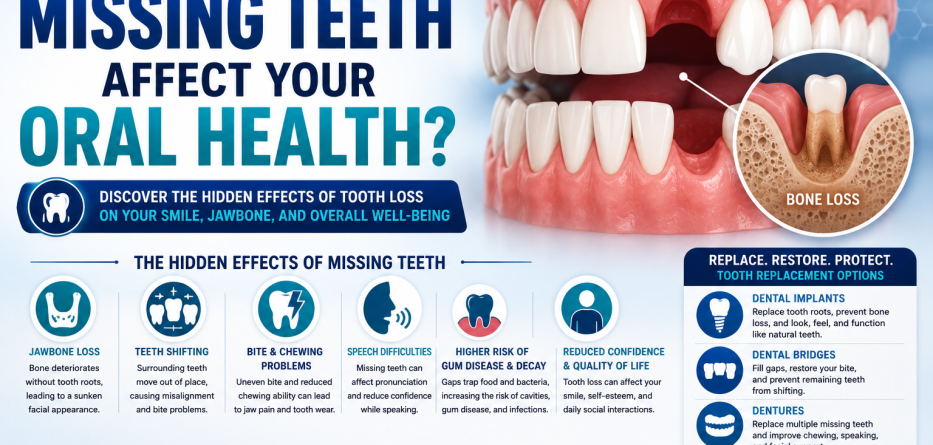
Many people assume that losing a tooth is primarily a cosmetic issue. While a gap in your smile can certainly affect your appearance, the consequences of missing teeth go far beyond aesthetics. Even a single missing tooth can trigger a series of oral health problems that impact your gums, jawbone, bite alignment, and overall quality of life.
If left untreated, missing teeth can lead to bone loss, shifting teeth, chewing difficulties, speech problems, and an increased risk of dental disease. Understanding these effects can help you take proactive steps to protect your oral health and prevent long-term complications.
In this guide, we’ll explore how missing teeth affect your oral health and why timely tooth replacement is essential.
Why Missing Teeth Should Never Be Ignored
Your teeth work together as a complete system. Each tooth plays an important role in:
- Chewing food properly
- Supporting facial structure
- Maintaining jawbone health
- Helping you speak clearly
- Keeping neighboring teeth aligned
When a tooth is lost, this balance is disrupted, often causing a chain reaction throughout the mouth.
1. Jawbone Loss and Deterioration
One of the most serious consequences of tooth loss is jawbone deterioration.
How It Happens
Natural tooth roots stimulate the jawbone every time you chew. When a tooth is missing, that stimulation disappears.
As a result:
- Bone tissue begins to shrink
- Bone density decreases
- The jaw weakens over time
Long-Term Effects
- Sunken facial appearance
- Premature aging
- Reduced support for remaining teeth
- Difficulty placing future dental implants
Bone loss can begin within the first year after tooth loss.
2. Shifting of Surrounding Teeth
When a tooth is lost, neighboring teeth often begin drifting into the empty space.
Problems Caused by Tooth Movement
- Crooked teeth
- Bite misalignment
- Increased plaque buildup
- Difficulty cleaning between teeth
- Greater risk of cavities and gum disease
Even a small shift can affect the entire bite.
3. Bite Problems and Uneven Wear
Your upper and lower teeth are designed to fit together properly.
When teeth are missing:
- Chewing forces become uneven
- Remaining teeth experience extra pressure
- Tooth wear accelerates
This may lead to:
- Cracked teeth
- Tooth fractures
- Jaw discomfort
- TMJ disorders
Maintaining a balanced bite is crucial for long-term oral health.
4. Difficulty Chewing Food
Missing teeth can make eating more challenging.
Common Problems
Patients may struggle with:
- Meat
- Raw vegetables
- Nuts
- Crunchy foods
- Hard fruits
As a result, many people begin avoiding healthy foods, which can negatively impact overall nutrition.
5. Speech Difficulties
Teeth play an important role in speech production.
Missing teeth, especially front teeth, can affect the pronunciation of sounds such as
- S
- F
- V
- TH
This may lead to:
- Speech difficulties
- Whistling sounds
- Reduced confidence in conversations
Proper tooth replacement often restores normal speech patterns.
6. Increased Risk of Gum Disease
The gaps left by missing teeth create areas where food particles and bacteria can accumulate.
Consequences Include
- Gum inflammation
- Gingivitis
- Periodontitis
- Bone loss around neighboring teeth
Poor gum health can threaten the stability of remaining teeth.
7. Higher Risk of Tooth Decay
When teeth shift out of alignment, they become more difficult to clean.
This can increase:
- Plaque accumulation
- Tartar formation
- Tooth decay
- Interdental cavities
Regular oral hygiene becomes more challenging as alignment changes.
8. Changes in Facial Appearance
Your teeth help support the muscles and tissues of your face.
Multiple missing teeth may cause the following:
- Sunken cheeks
- Collapsed facial structure
- Wrinkles around the mouth
- Older appearance
Many patients are surprised by how significantly tooth loss can affect facial aesthetics.
9. Reduced Self-Confidence
Tooth loss often affects emotional well-being.
People with missing teeth may feel self-conscious about the following:
- Smiling
- Speaking
- Eating in public
- Social interactions
This can impact both personal and professional relationships.
10. Increased Stress on Remaining Teeth
When one or more teeth are missing, the remaining teeth must compensate.
This extra workload can lead to:
- Excessive wear
- Cracks
- Fractures
- Tooth mobility
Over time, additional teeth may become compromised.
How Missing Teeth Affect Overall Health
Oral health and general health are closely connected.
Untreated tooth loss can contribute to:
- Poor nutrition
- Digestive problems
- Chronic inflammation
- Reduced quality of life
Difficulty chewing can limit food choices and impact overall wellness.
Tooth Replacement Options
Fortunately, several effective treatments are available.
Dental Implants
Benefits:
- Replace tooth roots
- Prevent bone loss
- Long-lasting solution
- Natural appearance
Dental Bridges
Benefits:
- Restore function
- Fill gaps effectively
- Improve appearance
Dentures
Benefits:
- Replace multiple missing teeth
- Affordable option
- Improved chewing ability
Your dentist can recommend the most suitable solution based on your individual needs.
Why Dental Implants Are Often Considered the Best Solution
Dental implants are unique because they replace both the visible tooth and its root.
Advantages include:
- Preservation of jawbone health
- Prevention of bone loss
- Exceptional stability
- Natural function
- Long-term durability
For many patients, implants provide the closest experience to natural teeth.
How to Prevent Tooth Loss
Prevention is always better than treatment.
Protect Your Teeth By:
- Brushing twice daily
- Flossing regularly
- Visiting the dentist every six months
- Wearing a mouthguard during sports
- Avoiding tobacco products
- Treating cavities and gum disease early
Good oral hygiene is the foundation of lifelong dental health.
Frequently Asked Questions
Is one missing tooth a big problem?
Yes. Even a single missing tooth can lead to shifting teeth, bone loss, and bite problems if left untreated.
How quickly does bone loss occur after tooth loss?
Bone loss can begin within the first few months and continue progressively over time.
Can missing teeth affect digestion?
Yes. Difficulty chewing food properly can impact digestion and nutrient absorption.
Do missing teeth cause jaw problems?
They can. Tooth loss often changes bite alignment and may contribute to TMJ issues.
What is the best replacement for a missing tooth?
Dental implants are often considered the most effective long-term solution because they replace both the tooth and its root.
Conclusion
Missing teeth affect far more than just your smile. They can lead to jawbone loss, shifting teeth, bite problems, gum disease, speech difficulties, and reduced confidence. The longer tooth loss goes untreated, the greater the risk of long-term oral health complications.
Fortunately, modern dentistry offers effective solutions such as dental implants, bridges, and dentures to restore function and protect your oral health. Seeking treatment early can help preserve your smile, maintain jawbone health, and improve your overall quality of life.