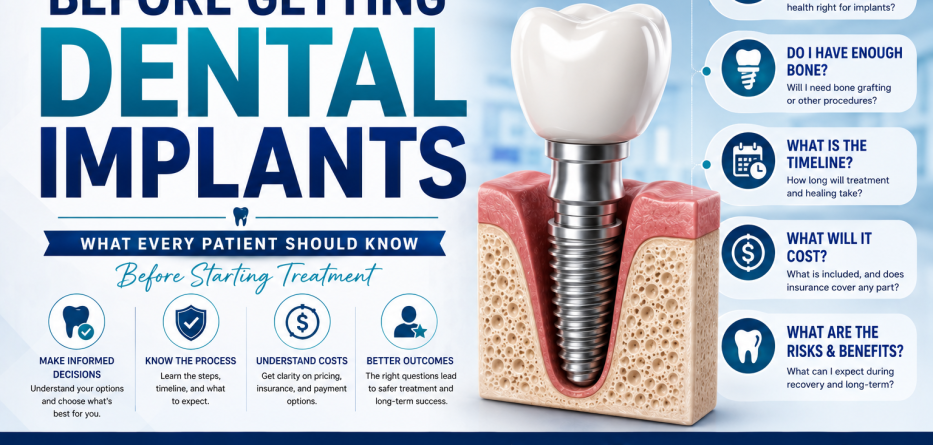
Dental implants are one of the most effective and long-lasting solutions for replacing missing teeth. They look natural, function like real teeth, and can last for decades with proper care. However, getting dental implants is a significant investment in your oral health, making it essential to understand the procedure before moving forward.
Asking the right questions during your consultation can help you make informed decisions, avoid surprises, and ensure you’re choosing the best treatment plan for your needs. Whether you’re replacing a single tooth or considering full-mouth dental implants, knowing what to ask can improve your confidence and treatment outcomes.
In this guide, we’ll cover the most important questions to ask before getting dental implants and explain why each one matters.
Why Asking Questions Matters
Dental implant treatment involves:
- Surgical placement
- Healing time
- Financial investment
- Long-term maintenance
Understanding the process helps you:
- Set realistic expectations
- Reduce anxiety
- Compare treatment options
- Choose the right provider
- Improve long-term success
A well-informed patient is often a more successful implant patient.
1. Am I a Good Candidate for Dental Implants?
Not everyone is automatically a candidate for implant treatment.
Ask your dentist:
“Am I a suitable candidate for dental implants?”
Factors that affect eligibility include:
- Bone density
- Gum health
- Smoking habits
- Overall health
- Medical history
Your dentist may recommend additional procedures if necessary.
2. Do I Have Enough Jawbone for Implants?
Dental implants require adequate bone support.
Ask:
“Do I have sufficient bone density for implant placement?”
If bone loss has occurred, treatment options may include:
- Bone grafting
- Sinus lift procedures
- Specialized implant techniques
Understanding your bone health is crucial for treatment planning.
3. What Type of Dental Implant Is Best for Me?
Several implant solutions are available.
Ask:
“Which implant option do you recommend and why?”
Possible options include:
- Single tooth implants
- Multiple tooth implants
- Implant-supported bridges
- All-on-4 implants
- Full-mouth dental implants
The best choice depends on your individual needs.
4. How Experienced Are You with Dental Implants?
Experience significantly influences treatment outcomes.
Ask:
“How many dental implant procedures have you performed?”
You may also ask about:
- Specialized training
- Certifications
- Success rates
- Before-and-after cases
Experienced providers are often better equipped to manage complex situations.
5. What Is Your Dental Implant Success Rate?
Implant success rates are typically very high.
Ask:
“What is your implant success rate?”
Many experienced providers achieve success rates exceeding 95%.
This question helps you understand the provider’s track record.
6. Will I Need Additional Procedures?
Some patients require preparatory treatment.
Ask:
“Will I need any procedures before implant placement?”
Examples include:
- Bone grafting
- Tooth extractions
- Gum disease treatment
- Sinus augmentation
Knowing this in advance helps with planning and budgeting.
7. What Is the Complete Treatment Timeline?
Dental implant treatment occurs in stages.
Ask:
“How long will the entire process take?”
Typical timeline:
| Treatment Stage | Estimated Time |
|---|---|
| Consultation | 1 Visit |
| Implant Placement | 1 Day |
| Healing Period | 3–6 Months |
| Final Restoration | Several Weeks |
The exact timeline varies by patient.
8. What Technology Do You Use?
Modern technology improves safety and precision.
Ask:
“Do you use 3D imaging and digital treatment planning?”
Advanced tools may include:
- CBCT scans
- Digital impressions
- Computer-guided surgery
- Intraoral scanners
These technologies often improve treatment outcomes.
9. What Are the Risks and Complications?
Every surgical procedure carries some risk.
Ask:
“What potential complications should I be aware of?”
Possible risks include the following:
- Infection
- Implant failure
- Delayed healing
- Nerve injury
- Bone loss
Understanding risks helps set realistic expectations.
10. What Will Recovery Be Like?
Knowing what to expect after surgery can reduce anxiety.
Ask:
“What should I expect during recovery?”
Topics to discuss:
- Swelling
- Pain management
- Activity restrictions
- Dietary recommendations
- Follow-up visits
Most patients experience only mild to moderate discomfort.
11. How Much Will Dental Implants Cost?
Dental implants are a long-term investment.
Ask:
“What is the total cost of treatment?”
Request a detailed breakdown that includes:
- Consultation fees
- Imaging
- Implant surgery
- Abutments
- Crowns
- Additional procedures
Understanding the full cost helps avoid surprises later.
12. Does Insurance Cover Any Part of Treatment?
Coverage varies by provider and policy.
Ask:
“Will my dental insurance contribute to the cost?”
Many offices can assist with:
- Insurance verification
- Financing plans
- Payment options
Exploring financial options may make treatment more affordable.
13. How Long Will My Dental Implants Last?
Longevity is one of the biggest advantages of implants.
Ask:
“What can I expect regarding implant lifespan?”
With proper care:
- Implant posts may last a lifetime
- Crowns often last 10–15 years or longer
Maintenance plays a major role in longevity.
14. How Should I Care for My Dental Implants?
Proper maintenance is essential.
Ask:
“What oral hygiene routine do you recommend?”
Typical care includes:
- Brushing twice daily
- Flossing regularly
- Routine dental cleanings
- Professional examinations
Implants require care similar to natural teeth.
15. What Happens If an Implant Fails?
Although uncommon, implant failure can occur.
Ask:
“What are my options if an implant fails?”
Your dentist should explain the following:
- Causes of failure
- Replacement options
- Corrective treatments
- Warranty policies if applicable
Having a contingency plan provides peace of mind.
Red Flags to Watch For
When choosing an implant provider, be cautious if:
- Questions are avoided
- No treatment plan is provided
- Costs are unclear
- Technology appears outdated
- Credentials cannot be verified
Transparency and communication are important indicators of quality care.
Benefits of Being an Informed Implant Patient
Asking thoughtful questions helps you:
- Understand the procedure
- Feel more confident
- Improve treatment compliance
- Reduce stress
- Achieve better outcomes
Patients who actively participate in treatment planning often experience greater satisfaction.
Frequently Asked Questions
What is the most important question to ask before getting dental implants?
Ask whether you’re a suitable candidate and whether you have enough bone support for successful treatment.
Are dental implants safe?
Yes. Dental implants are considered one of the safest and most predictable procedures in modern dentistry.
How many consultations should I get?
Many patients benefit from obtaining two opinions before making a final decision.
Do dental implants hurt?
Most patients report mild discomfort that is manageable with medication.
How long does implant treatment take?
Treatment often takes several months due to the healing period required for osseointegration.
Conclusion
Dental implants can be a life-changing solution for missing teeth, but the success of your treatment begins with asking the right questions. Understanding your candidacy, treatment timeline, costs, risks, and long-term maintenance requirements allows you to make informed decisions and choose the best provider for your needs.
By preparing these important questions before your consultation, you’ll be better equipped to achieve a safe, successful, and long-lasting dental implant experience.