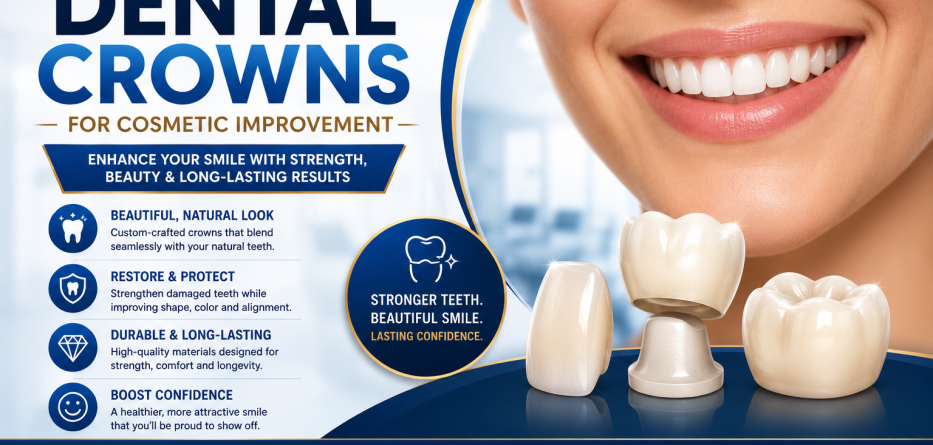
A beautiful smile can boost confidence, improve first impressions, and enhance overall appearance. While many people associate dental crowns with restoring damaged teeth, modern dentistry has made crowns an excellent cosmetic solution as well. Today, dental crowns are commonly used to improve the shape, size, color, and overall aesthetics of teeth while simultaneously strengthening them.
Whether you’re dealing with chipped teeth, severe discoloration, worn enamel, or irregular tooth shapes, dental crowns can provide a long-lasting and natural-looking transformation.
In this guide, we’ll explore how dental crowns can improve your smile, their benefits, treatment process, costs, and whether they are the right cosmetic dentistry option for you.
What Are Dental Crowns?
A dental crown is a custom-made cap that completely covers a damaged or imperfect tooth.
Crowns are designed to:
- Restore strength
- Improve appearance
- Protect weakened teeth
- Enhance smile aesthetics
Modern crowns are crafted from materials that closely mimic natural teeth, making them virtually indistinguishable from surrounding teeth.
How Dental Crowns Improve Your Smile
Dental crowns serve both functional and cosmetic purposes.
Cosmetic Benefits of Dental Crowns
They can improve:
- Tooth color
- Tooth shape
- Tooth size
- Alignment appearance
- Smile symmetry
- Overall facial aesthetics
Because crowns cover the entire visible tooth surface, they can dramatically enhance your smile’s appearance.
Common Cosmetic Problems Dental Crowns Can Fix
Severely Discolored Teeth
Some stains do not respond well to professional teeth whitening.
Dental crowns can completely cover the following:
- Deep stains
- Tetracycline discoloration
- Internal tooth staining
- Darkened root canal-treated teeth
Chipped or Cracked Teeth
Crowns restore both appearance and function.
Benefits include:
- Natural appearance
- Improved strength
- Protection against further damage
Worn-Down Teeth
Teeth can wear down due to:
- Grinding (bruxism)
- Acid erosion
- Aging
Crowns rebuild tooth structure and restore a youthful smile.
Misshapen Teeth
Crowns can correct:
- Uneven teeth
- Small teeth
- Irregular tooth contours
This creates a more balanced and attractive smile.
Large Fillings and Cosmetic Imperfections
When a tooth has extensive restorations, a crown can provide a more aesthetic and durable solution.
Types of Dental Crowns for Cosmetic Dentistry
Several crown materials are available.
Porcelain Crowns
Porcelain crowns are among the most popular cosmetic options.
Benefits include:
- Highly natural appearance
- Excellent translucency
- Stain resistance
- Metal-free construction
They closely resemble natural tooth enamel.
Zirconia Crowns
Zirconia combines strength with aesthetics.
Advantages include:
- Exceptional durability
- Natural appearance
- Biocompatibility
- Long lifespan
Porcelain-Fused-to-Metal Crowns
These crowns combine porcelain aesthetics with a metal framework.
While durable, they may not be as natural-looking as all-ceramic options.
E-Max Crowns
Lithium disilicate (E-Max) crowns are known for the following:
- Superior aesthetics
- Strength
- Natural translucency
- Excellent cosmetic results
Many cosmetic dentists prefer E-Max crowns for visible front teeth.
Dental Crowns vs Veneers
Many patients compare crowns and veneers when considering smile enhancement.
| Feature | Dental Crowns | Veneers |
|---|---|---|
| Coverage | Entire Tooth | Front Surface Only |
| Strengthening Effect | Yes | Limited |
| Cosmetic Improvement | Excellent | Excellent |
| Suitable for Damaged Teeth | Yes | Not Always |
| Durability | High | High |
| Tooth Preparation | More Extensive | Less Extensive |
Crowns are often recommended when cosmetic concerns are combined with structural damage.
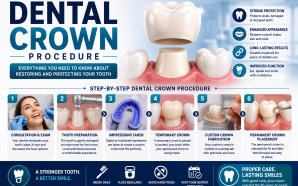
The Dental Crown Procedure
Step 1: Consultation
Your dentist evaluates:
- Oral health
- Cosmetic goals
- Tooth structure
- Bite alignment
Step 2: Tooth Preparation
A small amount of enamel is removed to create space for the crown.
Step 3: Digital Impressions
Modern practices often use digital scanners for highly accurate impressions.
Step 4: Temporary Crown
A temporary crown protects the prepared tooth while the permanent crown is fabricated.
Step 5: Final Placement
The custom crown is bonded securely to the tooth.
Your dentist checks:
- Fit
- Appearance
- Bite alignment
Benefits of Dental Crowns for Cosmetic Improvement
Natural Appearance
Modern crowns are designed to blend seamlessly with natural teeth.
Improved Confidence
Patients often report greater self-esteem after treatment.
Long-Term Results
Many crowns last 10 to 15 years or longer.
Enhanced Function
Crowns restore chewing ability while improving aesthetics.
Smile Symmetry
They help create a more balanced and harmonious smile.
How Long Do Cosmetic Dental Crowns Last?
The lifespan depends on:
- Material used
- Oral hygiene habits
- Bite forces
- Professional maintenance
Average Lifespan
| Crown Type | Typical Lifespan |
|---|---|
| Porcelain | 10–15 Years |
| Zirconia | 15–20 Years |
| E-Max | 10–15 Years |
Proper care can significantly extend longevity.
Caring for Cosmetic Dental Crowns
To maintain beautiful results:
- Brush twice daily
- Floss regularly
- Avoid chewing ice
- Wear a nightguard if needed
- Attend regular dental checkups
Good oral hygiene protects both the crown and surrounding gum tissue.
Are Dental Crowns Worth It for Cosmetic Improvement?
For many patients, the answer is yes.
Dental crowns provide the following:
- Dramatic smile enhancement
- Long-lasting results
- Improved tooth strength
- Greater confidence
- Functional restoration
When both aesthetics and durability are priorities, crowns can be an excellent investment.
Who Is a Good Candidate for Cosmetic Crowns?
You may be a good candidate if you have:
- Severely stained teeth
- Cracked or chipped teeth
- Worn enamel
- Large fillings
- Misshapen teeth
- Cosmetic concerns combined with structural damage
A consultation with a cosmetic dentist can determine the most appropriate treatment option.
Frequently Asked Questions
Are dental crowns cosmetic or restorative?
Dental crowns can be both. They improve appearance while restoring strength and function.
Which crown material looks most natural?
Porcelain and E-Max crowns are generally considered the most natural-looking options.
Do cosmetic crowns stain?
High-quality porcelain and ceramic crowns are highly stain-resistant.
How long do cosmetic dental crowns last?
Most crowns last between 10 and 20 years with proper care.
Are crowns better than veneers?
It depends on the condition of your teeth. Crowns are often preferred when teeth require additional structural support.
Can front teeth be crowned?
Yes. Modern ceramic crowns are frequently used to improve the appearance of front teeth.
Conclusion
Dental crowns are no longer just a restorative treatment—they are also a highly effective cosmetic dentistry solution. Whether you’re dealing with discoloration, chips, worn enamel, or misshapen teeth, crowns can dramatically improve your smile while strengthening your teeth at the same time.
With advanced materials such as porcelain, zirconia, and E-Max, today’s crowns offer beautiful, natural-looking results that can last for many years. If you’re seeking a smile makeover that combines aesthetics, durability, and functionality, dental crowns may be the ideal solution for achieving the confident smile you’ve always wanted.