A beautiful smile can boost confidence and leave a lasting impression. However, chipped, cracked, discolored, or uneven teeth can make many people feel self-conscious about their appearance. Fortunately, modern cosmetic dentistry offers several solutions, and one of the most affordable and minimally invasive options is teeth bonding.
The teeth-bonding procedure is a quick and effective cosmetic treatment that can repair minor dental imperfections and enhance the appearance of your smile. Often completed in a single dental visit, bonding is a popular choice for patients seeking immediate results without extensive dental work.
In this guide, we’ll explain the teeth bonding procedure, its benefits, costs, risks, recovery process, and how it compares to other cosmetic dental treatments.
What Is Teeth Bonding?
Teeth bonding, also known as dental bonding or composite bonding, is a cosmetic dental procedure in which a tooth-colored composite resin material is applied to the surface of a tooth and carefully shaped to improve its appearance.
The resin is then hardened using a special curing light and polished to blend naturally with the surrounding teeth.
Quick Definition
Teeth bonding is a cosmetic dental procedure that uses tooth-colored resin to repair chips, cracks, gaps, discoloration, and minor imperfections in teeth.
What Dental Problems Can Teeth Bonding Fix?
Dental bonding is commonly used to correct:
- Chipped teeth
- Cracked teeth
- Small gaps between teeth
- Tooth discoloration
- Uneven tooth shape
- Minor tooth length issues
- Worn tooth edges
- Exposed tooth roots caused by gum recession
Bonding is best suited for minor cosmetic concerns rather than major structural problems.
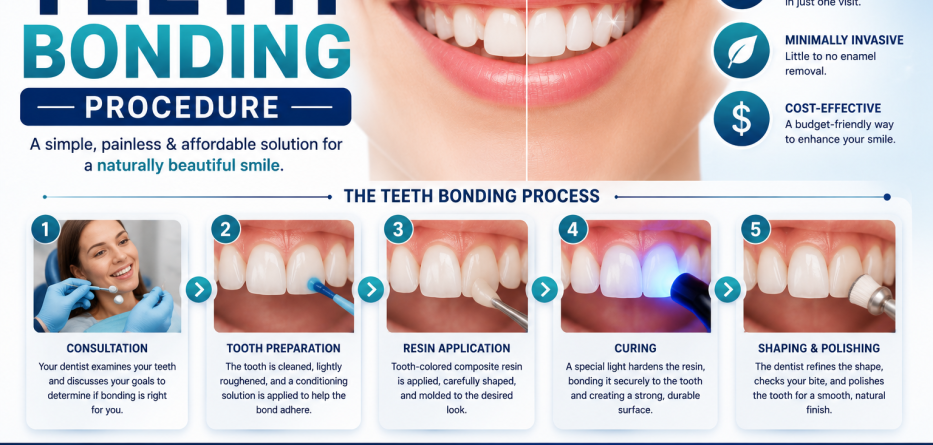
The Teeth Bonding Procedure: Step-by-Step
One of the biggest advantages of dental bonding is its simplicity.
Step 1: Initial Consultation
The dentist evaluates your oral health and determines whether bonding is the right treatment option.
During this visit, they may:
- Examine your teeth
- Discuss cosmetic goals
- Select the appropriate resin shade
Step 2: Tooth Preparation
Unlike veneers or crowns, bonding requires little or no removal of natural tooth enamel.
The dentist will:
- Clean the tooth surface
- Slightly roughen the enamel
- Apply a conditioning liquid
This helps the bonding material adhere securely.
Step 3: Resin Application
The tooth-colored composite resin is applied directly to the tooth.
The dentist carefully
- Adds the material
- Shapes the tooth
- Sculpts the desired appearance
This stage requires artistic precision to achieve natural-looking results.
Step 4: Curing Process
A special ultraviolet or LED curing light is used to harden the composite material.
The curing process usually takes the following:
- 20–40 seconds per layer
Once hardened, the resin becomes durable and stable.
Step 5: Final Shaping and Polishing
After curing, the dentist:
- Trims excess material
- Refines the shape
- Polishes the surface
The finished result closely resembles a natural tooth.
How Long Does Teeth Bonding Take?
Dental bonding is one of the quickest cosmetic dental procedures available.
Typical Treatment Time
| Number of Teeth | Estimated Time |
|---|---|
| One Tooth | 30–60 Minutes |
| Multiple Teeth | 1–2 Hours |
| Full Smile Bonding | Several Hours |
Most patients complete treatment in a single appointment.
Benefits of Teeth Bonding
Affordable Cosmetic Solution
Compared to veneers and crowns, bonding is often more budget-friendly.
Minimally Invasive
Little to no enamel removal is required.
Quick Results
Most procedures are completed in one visit.
Natural Appearance
Modern composite materials closely mimic natural teeth.
Reversible Treatment
Because minimal tooth structure is removed, bonding is often considered reversible.
Who Is a Good Candidate for Teeth Bonding?
You may be a good candidate if you have:
- Minor chips or cracks
- Small gaps between teeth
- Mild discoloration
- Slightly uneven teeth
- Healthy gums and teeth
Bonding works best for cosmetic enhancements rather than major restorative needs.
How Long Does Teeth Bonding Last?
The lifespan of bonding depends on several factors.
Average Longevity
Most dental bonding lasts
- 3 to 10 years
Factors affecting longevity include:
- Oral hygiene habits
- Diet
- Teeth grinding
- Smoking
- Bite pressure
Proper care can significantly extend the life of bonded teeth.
Teeth Bonding vs Veneers
Many patients compare bonding with veneers.
| Feature | Teeth Bonding | Veneers |
|---|---|---|
| Cost | Lower | Higher |
| Procedure Time | One Visit | Multiple Visits |
| Durability | 3–10 Years | 10–20 Years |
| Stain Resistance | Moderate | Excellent |
| Enamel Removal | Minimal | Usually Required |
| Repairability | Easy | More Difficult |
Bonding is often ideal for minor cosmetic improvements, while veneers provide longer-lasting transformations.
Teeth Bonding vs Dental Crowns
Crowns are designed for teeth with significant structural damage.
Bonding Is Better For:
- Small cosmetic defects
- Minor chips
- Gap closure
Crowns Are Better For:
- Severely damaged teeth
- Large fractures
- Root canal-treated teeth
Your dentist can recommend the most suitable option.
Caring for Bonded Teeth
Proper care helps maintain appearance and durability.
Daily Care Tips
- Brush twice daily
- Floss regularly
- Use a soft-bristled toothbrush
- Visit your dentist regularly
Avoid
- Biting ice
- Chewing hard objects
- Excessive coffee or tea consumption
- Tobacco products
These habits can shorten the lifespan of bonded restorations.
Are There Any Risks?
Dental bonding is considered very safe.
However, potential limitations include:
Staining
Composite resin is more prone to staining than porcelain.
Chipping
The material is durable but not as strong as natural enamel.
Wear Over Time
Bonding may require touch-ups or replacement after several years.
Fortunately, repairs are typically simple and affordable.
Cost of Teeth Bonding
The cost varies depending on the following:
- Number of teeth treated
- Complexity of treatment
- Geographic location
- Dentist experience
Bonding is generally one of the most affordable cosmetic dental procedures available.
A consultation is the best way to obtain an accurate estimate.
Frequently Asked Questions
Is teeth bonding painful?
No. Most bonding procedures require little or no anesthesia and involve minimal discomfort.
How long does dental bonding last?
Most bonded teeth last between 3 and 10 years with proper care.
Can bonded teeth be whitened?
No. Composite resin does not respond to whitening treatments.
Is dental bonding permanent?
Bonding is durable but not considered permanent. Replacement or repairs may be needed over time.
Can bonding fix gaps between teeth?
Yes. Dental bonding is commonly used to close small gaps between teeth.
Does bonding damage natural teeth?
No. Bonding is one of the most conservative cosmetic treatments and typically requires minimal enamel removal.
Conclusion
The teeth-bonding procedure is a simple, affordable, and highly effective way to improve the appearance of your smile. Whether you’re dealing with chipped teeth, discoloration, small gaps, or minor cosmetic imperfections, dental bonding can provide immediate and natural-looking results.
With minimal preparation, quick treatment times, and excellent aesthetic outcomes, bonding remains one of the most popular cosmetic dental procedures available today. By maintaining good oral hygiene and regular dental visits, you can enjoy a brighter, more confident smile for years to come.