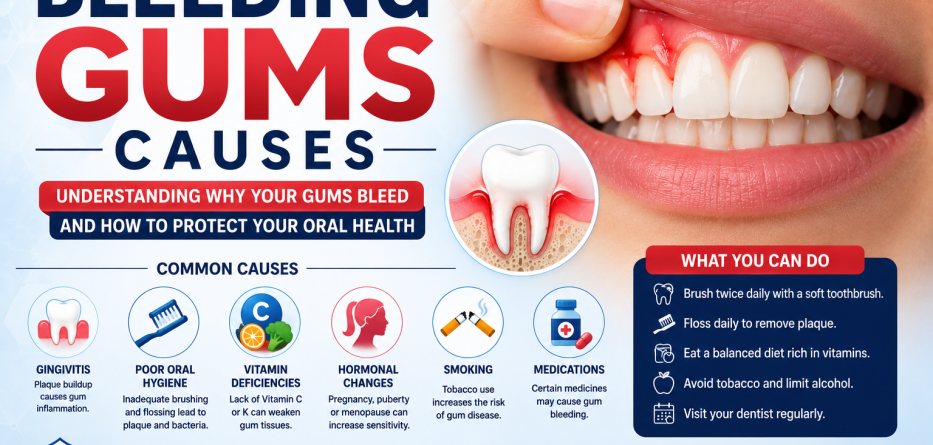
Have you noticed blood in the sink after brushing or flossing your teeth? While occasional gum bleeding may seem harmless, it is often a warning sign that something is wrong with your oral health. Bleeding gums are one of the earliest symptoms of gum disease, but they can also result from poor oral hygiene, nutritional deficiencies, medical conditions, or certain medications.
Ignoring bleeding gums can lead to more serious dental problems, including gum recession, tooth loss, and infections. Understanding the causes of bleeding gums can help you take the right steps to protect your smile and overall health.
In this guide, we’ll explore the most common causes of bleeding gums, treatment options, prevention strategies, and when you should see a dentist.
What Are Bleeding Gums?
Bleeding gums occur when the gum tissue becomes irritated, inflamed, or damaged, causing blood to appear during brushing, flossing, eating, or even spontaneously.
Common Symptoms
- Blood while brushing teeth
- Bleeding during flossing
- Red or swollen gums
- Tender gums
- Bad breath
- Gum sensitivity
While occasional bleeding can occur, persistent bleeding should never be ignored.
What Causes Bleeding Gums?
Several factors can contribute to bleeding gums.
1. Gingivitis (Early Gum Disease)
The most common cause of bleeding gums is gingivitis.
Gingivitis develops when plaque accumulates along the gumline and causes inflammation.
Symptoms of Gingivitis
- Red gums
- Swollen gums
- Bleeding during brushing
- Bad breath
The good news is that gingivitis is reversible with proper oral care and professional cleaning.
2. Periodontitis (Advanced Gum Disease)
If gingivitis is left untreated, it can progress to periodontitis.
This advanced stage of gum disease affects the tissues and bone supporting the teeth.
Warning Signs
- Persistent bleeding
- Gum recession
- Loose teeth
- Pus between teeth and gums
- Tooth sensitivity
Periodontitis is a leading cause of adult tooth loss worldwide.
3. Poor Oral Hygiene
Inadequate brushing and flossing allow plaque and bacteria to accumulate around the teeth and gums.
This buildup can cause the following:
- Gum inflammation
- Bleeding
- Bad breath
- Increased risk of cavities
Maintaining good oral hygiene is essential for healthy gums.
4. Brushing Too Hard
Using excessive force while brushing can damage delicate gum tissue.
Common Mistakes
- Aggressive brushing
- Hard-bristled toothbrushes
- Incorrect brushing techniques
Dentists typically recommend using a soft-bristled toothbrush and gentle circular motions.
5. Improper Flossing
People who begin flossing after a long period may notice temporary gum bleeding.
This usually improves within a few days as the gums become healthier.
However, persistent bleeding may indicate gum disease.
6. Vitamin Deficiencies
Certain nutritional deficiencies can weaken gum tissue and increase bleeding.
Vitamin C Deficiency
Vitamin C helps maintain healthy gums and supports tissue repair.
Deficiency may cause:
- Gum bleeding
- Swollen gums
- Delayed healing
Vitamin K Deficiency
Vitamin K plays an important role in blood clotting.
Low levels can contribute to excessive bleeding.
7. Hormonal Changes
Hormonal fluctuations can increase gum sensitivity and inflammation.
Common Situations
- Pregnancy
- Puberty
- Menopause
- Menstrual cycles
Pregnancy gingivitis is particularly common and should be monitored by a dentist.
8. Smoking and Tobacco Use
Smoking weakens the body’s ability to fight infection and heal gum tissue.
Tobacco use increases the risk of:
- Gum disease
- Bone loss
- Delayed healing
- Tooth loss
Quitting smoking can significantly improve gum health.
9. Certain Medications
Some medications may increase the likelihood of bleeding gums.
Examples Include
- Blood thinners
- Aspirin
- Anticoagulants
- Certain blood pressure medications
If you notice persistent bleeding after starting a medication, consult your healthcare provider.
10. Diabetes
People with uncontrolled diabetes are more susceptible to infections, including gum disease.
Symptoms may include:
- Bleeding gums
- Swollen gums
- Delayed healing
- Frequent infections
Managing blood sugar levels can help reduce oral health complications.
11. Stress
Chronic stress can weaken the immune system and increase inflammation throughout the body, including the gums.
Stress may contribute to the following:
- Gum disease progression
- Teeth grinding
- Reduced oral hygiene habits
Managing stress supports both oral and overall health.
12. Blood Disorders
In rare cases, bleeding gums may indicate an underlying medical condition.
Examples include:
- Leukemia
- Hemophilia
- Platelet disorders
If gum bleeding occurs frequently without an obvious cause, medical evaluation may be necessary.
When Should You See a Dentist?
Schedule a dental appointment if:
- Bleeding persists for more than one week
- Gums are swollen or painful
- Teeth feel loose
- You notice gum recession
- Bleeding occurs without brushing or flossing
Early treatment can prevent more serious complications.
How Are Bleeding Gums Treated?
Treatment depends on the underlying cause.
Professional Dental Cleaning
Removes plaque and tartar buildup.
Improved Oral Hygiene
Includes:
- Brushing twice daily
- Daily flossing
- Antibacterial mouthwash
Periodontal Therapy
Advanced gum disease may require:
- Scaling and root planing
- Deep cleaning
- Surgical treatment
Medical Management
Addressing underlying health conditions may also help resolve bleeding gums.
How to Prevent Bleeding Gums
Follow these simple habits to maintain healthy gums.
Daily Prevention Tips
- Brush twice daily using a soft-bristled toothbrush.
- Floss every day.
- Use fluoride toothpaste.
- Visit your dentist regularly.
- Eat a balanced diet rich in vitamins.
- Stay hydrated.
- Avoid tobacco products.
- Manage chronic health conditions.
Consistent oral care is the best defense against gum disease and bleeding.
Foods That Support Healthy Gums
A nutritious diet can strengthen gum tissue and reduce inflammation.
Recommended Foods
- Citrus fruits
- Strawberries
- Bell peppers
- Leafy greens
- Dairy products
- Nuts
- Fish rich in omega-3 fatty acids
These foods provide vitamins and minerals that promote gum health.
Frequently Asked Questions
Are bleeding gums normal?
Occasional bleeding may occur, but persistent bleeding is usually a sign of gum inflammation or disease.
Can bleeding gums heal on their own?
Mild cases caused by temporary irritation may improve, but ongoing bleeding typically requires improved oral hygiene or professional treatment.
Is bleeding while flossing a concern?
New flossers may experience temporary bleeding, but persistent bleeding may indicate gingivitis or gum disease.
Can stress cause bleeding gums?
Yes. Stress can weaken immune function and increase inflammation, making gums more susceptible to disease.
What vitamin deficiency causes bleeding gums?
Vitamin C and vitamin K deficiencies are commonly associated with gum bleeding.
Can bleeding gums lead to tooth loss?
If caused by untreated periodontal disease, bleeding gums can eventually contribute to tooth loss.
Conclusion
Bleeding gums are often one of the earliest warning signs of an oral health problem. While gingivitis is the most common cause, factors such as poor oral hygiene, vitamin deficiencies, smoking, hormonal changes, medications, and underlying health conditions can also contribute.
The good news is that most causes of bleeding gums are treatable when detected early. Maintaining proper oral hygiene, eating a balanced diet, and scheduling regular dental checkups can help keep your gums healthy and prevent more serious complications.
If your gums continue to bleed despite good oral care, consult your dentist for a professional evaluation and personalized treatment plan.