

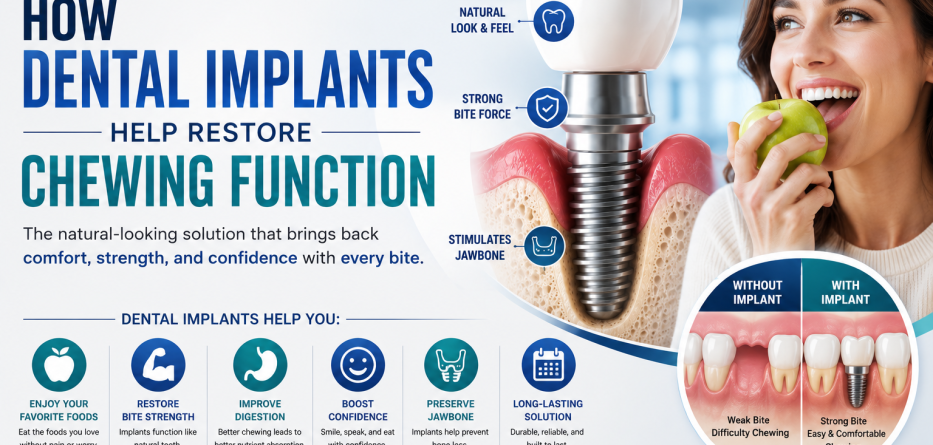
Chewing is one of the most important functions of the mouth, yet many people take it for granted until they lose one or more teeth. Missing teeth can make it difficult to eat certain foods, affect nutrition, and even impact overall quality of life. Fortunately, dental implants offer a highly effective solution for restoring chewing function and helping patients enjoy their favorite foods again.
Unlike traditional dentures or bridges, dental implants are designed to replace both the visible tooth and its root, providing exceptional stability and strength. This allows patients to bite and chew with confidence while maintaining long-term oral health.
In this article, we’ll explore how dental implants restore chewing function, why they are considered the gold standard for tooth replacement, and the benefits they offer for everyday eating.
Why Is Chewing Function Important?
Chewing is the first step in the digestive process. Proper chewing breaks food into smaller particles, making it easier for the body to absorb nutrients.
Healthy chewing function helps:
- Improve digestion
- Enhance nutrient absorption
- Maintain jawbone health
- Support speech and facial structure
- Improve overall quality of life
When teeth are missing, these functions can become compromised.
How Missing Teeth Affect Chewing Ability
Each tooth plays a role in distributing chewing forces evenly throughout the mouth.
When a tooth is lost, patients may experience:
Reduced Bite Strength
The ability to bite into foods like apples, sandwiches, and meats decreases significantly.
Difficulty Chewing Certain Foods
Common foods that become challenging include:
- Steak
- Nuts
- Raw vegetables
- Hard fruits
- Crusty bread
Uneven Pressure on Remaining Teeth
The remaining teeth often compensate for the missing tooth, which can lead to excessive wear and potential damage.
Changes in Diet
Many people begin avoiding nutritious foods that are difficult to chew, potentially affecting overall health.
What Are Dental Implants?
Dental implants are artificial tooth roots made from biocompatible titanium. They are surgically placed into the jawbone and support a custom-made dental crown.
A dental implant consists of:
- Implant Post
- Abutment
- Crown
Once healed, the implant functions similarly to a natural tooth root.
How Dental Implants Restore Chewing Function
Replacing the Entire Tooth Structure
Unlike dentures that rest on the gums, dental implants replace both the crown and root of a missing tooth.
This provides:
- Better stability
- Improved force distribution
- Natural tooth function
The implant becomes securely anchored through a process called osseointegration, where the bone fuses directly with the implant surface.
Restoring Bite Force
One of the biggest advantages of dental implants is their ability to restore chewing power.
Studies suggest that traditional dentures may provide only a fraction of the bite force of natural teeth.
Dental implants can restore significantly more chewing efficiency, allowing patients to:
- Bite firmly
- Chew comfortably
- Eat a wider variety of foods
Many patients report feeling as though they have regained their natural teeth.
Preventing Movement During Eating
Traditional dentures can sometimes shift or slip while chewing.
Dental implants eliminate this concern because they are fixed securely in the jawbone.
Benefits include:
- Greater confidence while eating
- Improved comfort
- Reduced irritation
- Enhanced speech stability
Patients can enjoy meals without worrying about their restoration moving.
Dental Implants vs Dentures for Chewing Function
| Feature | Dental Implants | Dentures |
|---|---|---|
| Stability | Excellent | Moderate |
| Bite Strength | High | Limited |
| Movement During Eating | None | Possible |
| Comfort | Excellent | Moderate |
| Bone Preservation | Yes | No |
| Long-Term Function | Excellent | Moderate |
This comparison highlights why many patients prefer implants when restoring chewing ability.
How Osseointegration Supports Strong Chewing
Osseointegration is the biological process that allows the implant to bond with the jawbone.
This connection creates:
- Exceptional stability
- Strong force absorption
- Natural chewing mechanics
- Long-term durability
Without osseointegration, implants would not be able to withstand the daily forces generated during eating.
Restoring Multiple Missing Teeth
Dental implants can restore chewing function even when several teeth are missing.
Treatment options include:
Single Tooth Implants
Ideal for replacing one missing tooth.
Implant-Supported Bridges
Used when multiple adjacent teeth are missing.
Full-Arch Dental Implants
Suitable for patients missing most or all teeth.
These solutions can dramatically improve chewing efficiency and quality of life.
Nutritional Benefits of Restored Chewing Function
When patients regain the ability to chew properly, they often return to a healthier and more varied diet.
Benefits include:
- Increased fruit consumption
- More vegetables
- Better protein intake
- Improved digestion
- Enhanced overall health
Many patients experience positive lifestyle changes after implant treatment.
Additional Benefits Beyond Chewing
While restoring chewing function is a major advantage, dental implants also provide several additional benefits.
Improved Appearance
Implants look and feel like natural teeth.
Bone Preservation
Implants stimulate the jawbone and help prevent bone loss.
Better Speech
Stable implants reduce speech difficulties associated with missing teeth or loose dentures.
Increased Confidence
Patients often feel more comfortable smiling, eating, and speaking in social situations.
Who Is a Good Candidate for Dental Implants?
Ideal candidates typically have:
- Healthy gums
- Adequate jawbone density
- Good overall health
- Commitment to oral hygiene
Even patients with bone loss may qualify through bone grafting procedures.
A comprehensive evaluation can determine the most appropriate treatment plan.
Tips for Maintaining Implant Function
To keep dental implants performing optimally:
- Brush twice daily.
- Floss regularly.
- Attend routine dental checkups.
- Avoid smoking.
- Follow professional maintenance recommendations.
Proper care helps ensure long-term chewing performance and implant success.
Frequently Asked Questions
Can dental implants restore normal chewing?
Yes. Dental implants are designed to restore chewing function as closely as possible to natural teeth.
Are implants stronger than dentures?
In most cases, yes. Implants provide greater stability and bite force than traditional dentures.
How long does it take before I can chew normally?
Most patients can gradually return to normal chewing after healing and final crown placement, typically within several months.
Can I eat hard foods with dental implants?
Once fully healed, many patients can comfortably eat foods such as apples, nuts, and meats.
Do implants help with digestion?
Yes. Improved chewing efficiency helps break down food more effectively, supporting healthy digestion.
Conclusion
Dental implants are one of the most effective solutions for restoring chewing function after tooth loss. By replacing both the tooth root and crown, implants provide exceptional stability, improved bite force, and natural chewing performance. They allow patients to enjoy a wider variety of foods, maintain better nutrition, and experience a higher quality of life.
Whether replacing a single tooth or a full arch of teeth, dental implants offer long-term benefits that extend far beyond appearance. For many patients, restoring chewing function is one of the most life-changing advantages of modern implant dentistry.

