

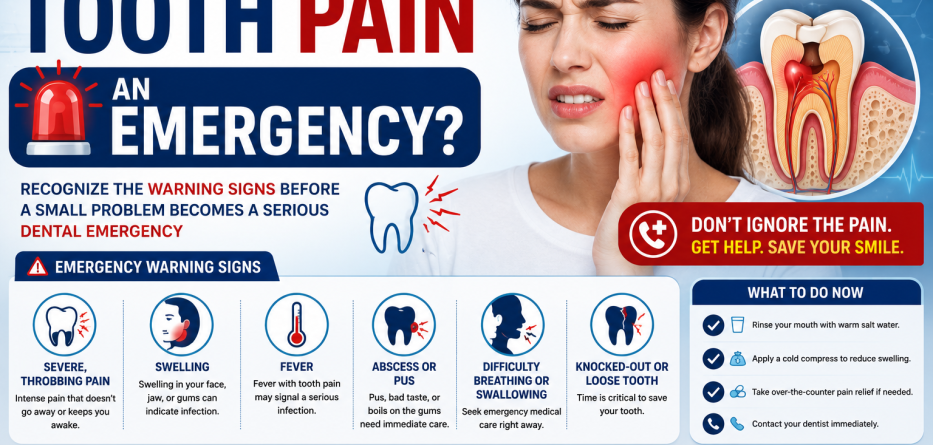
Tooth pain is one of the most common dental problems people experience. Sometimes it’s a minor issue that can wait for a routine dental appointment. Other times, it may indicate a serious infection, injury, or underlying condition that requires immediate treatment.
Knowing when tooth pain is an emergency can help prevent complications such as tooth loss, spreading infections, and severe discomfort. While not every toothache requires urgent care, certain symptoms should never be ignored.
In this guide, we’ll explain the common causes of tooth pain, warning signs that require emergency dental care, and what you should do if you experience severe tooth pain.
What Causes Tooth Pain?
Tooth pain can occur for many reasons, including:
- Tooth decay (cavities)
- Dental abscesses
- Cracked or fractured teeth
- Gum disease
- Impacted wisdom teeth
- Damaged fillings or crowns
- Teeth grinding (bruxism)
- Dental trauma
- Exposed tooth roots
The severity and location of the pain often provide clues about the underlying problem.
Is Every Toothache a Dental Emergency?
Quick Answer
No. Mild sensitivity or occasional discomfort may not require immediate attention. However, severe, persistent, or worsening tooth pain accompanied by swelling, fever, or trauma should be treated as a dental emergency.
The key is recognizing symptoms that indicate a potentially serious problem.
Signs Your Tooth Pain Is a Dental Emergency
1. Severe, Unbearable Pain
Intense tooth pain that interferes with eating, sleeping, or daily activities often signals a serious issue.
Possible causes include the following:
- Deep tooth infection
- Dental abscess
- Exposed nerve
- Advanced decay
What to Do
- Contact an emergency dentist immediately.
- Use a cold compress for swelling.
- Take pain medication as directed.
Do not ignore severe pain, as it often worsens over time.
2. Swelling in the Face, Jaw, or Gums
Swelling is a major warning sign of infection.
Symptoms may include:
- Puffy gums
- Facial swelling
- Tender jaw
- Difficulty opening the mouth
Why It’s Serious
Dental infections can spread beyond the mouth and affect other parts of the body.
Seek emergency dental care as soon as possible.
3. Fever Along With Tooth Pain
If tooth pain is accompanied by fever, it may indicate a serious infection.
Common symptoms include:
- Fever
- Chills
- Fatigue
- Swelling
- Throbbing pain
This combination requires prompt professional treatment.
4. Difficulty Breathing or Swallowing
This is a true medical emergency.
Severe dental infections can spread into the neck and airway.
Seek Immediate Medical Care If You Experience the Following:
- Difficulty breathing
- Difficulty swallowing
- Rapidly increasing swelling
- Severe facial pain
Visit the nearest emergency room immediately.
5. Knocked-Out or Loose Tooth
Trauma-related tooth pain often requires urgent treatment.
A knocked-out permanent tooth has the best chance of being saved if treated within 30 to 60 minutes.
What to Do
- Handle the tooth by the crown only.
- Rinse gently if dirty.
- Place it back into the socket if possible.
- Store in milk if necessary.
- See a dentist immediately.
6. Cracked or Broken Tooth With Pain
A fracture can expose sensitive nerves and allow bacteria to enter the tooth.
Symptoms may include:
- Sharp pain when biting
- Sensitivity to temperature
- Visible crack
- Swelling
Emergency treatment can help prevent infection and preserve the tooth.
7. Dental Abscess
A dental abscess is one of the most serious causes of tooth pain.
Common Symptoms
- Severe throbbing pain
- Swollen gums
- Pus drainage
- Bad taste in the mouth
- Fever
- Facial swelling
An abscess will not heal on its own and requires immediate professional care.
Symptoms That May Not Be an Emergency
Not all tooth discomfort requires urgent treatment.
Examples include:
- Mild sensitivity to hot or cold foods
- Temporary discomfort after dental procedures
- Minor gum irritation
- Slight tooth soreness
Although these issues may not be emergencies, they should still be evaluated if symptoms persist.
What Should You Do While Waiting for Treatment?
If you cannot see a dentist immediately, these steps may help reduce discomfort.
Home Care Tips
- Rinse with warm saltwater.
- Apply a cold compress.
- Take over-the-counter pain relievers.
- Keep the area clean.
- Avoid extremely hot or cold foods.
Avoid
- Applying aspirin directly to gums
- Using sharp objects around the tooth
- Ignoring worsening symptoms
These actions can make the situation worse.
Common Causes of Emergency Tooth Pain
| Cause | Emergency Level |
|---|---|
| Dental Abscess | High |
| Knocked-Out Tooth | High |
| Cracked Tooth | Moderate to High |
| Advanced Tooth Decay | Moderate |
| Gum Infection | Moderate to High |
| Sensitive Teeth | Low |
| Mild Cavity | Low to Moderate |
Understanding the cause helps determine how urgently treatment is needed.
How Dentists Treat Emergency Tooth Pain
Treatment depends on the underlying cause.
Possible procedures include:
Root Canal Therapy
Removes infected tissue inside the tooth.
Tooth Extraction
May be necessary if the tooth cannot be saved.
Drainage of Abscess
Relieves infection and pressure.
Dental Crown Placement
Protects damaged teeth.
Antibiotic Therapy
Helps control bacterial infections.
Early intervention often results in simpler treatment and better outcomes.
How to Prevent Dental Emergencies
Many dental emergencies can be prevented through proper oral care.
Prevention Tips
- Brush twice daily.
- Floss every day.
- Visit your dentist regularly.
- Wear a mouthguard during sports.
- Avoid chewing hard objects.
- Treat cavities early.
- Address teeth grinding promptly.
Preventive care is the best defense against severe tooth pain.
Frequently Asked Questions
When should I go to the emergency room for tooth pain?
Go to the ER if tooth pain is accompanied by severe swelling, difficulty breathing, difficulty swallowing, or facial trauma.
Can a tooth infection become dangerous?
Yes. Untreated infections can spread to the jaw, neck, and bloodstream.
How do I know if my toothache is serious?
Persistent pain, swelling, fever, pus drainage, and trauma are signs that require immediate attention.
Is throbbing tooth pain an emergency?
It can be. Throbbing pain often indicates infection or nerve involvement.
Will a tooth abscess go away on its own?
No. An abscess requires professional treatment.
Conclusion
So, when is tooth pain an emergency?
If your toothache is severe, persistent, accompanied by swelling, fever, trauma, or difficulty breathing, it should be treated as a dental emergency. These symptoms often indicate serious conditions that require immediate professional care.
Prompt treatment can save teeth, prevent complications, and protect your overall health. If you’re ever unsure whether your tooth pain is an emergency, it’s always safest to contact your dentist for guidance.

