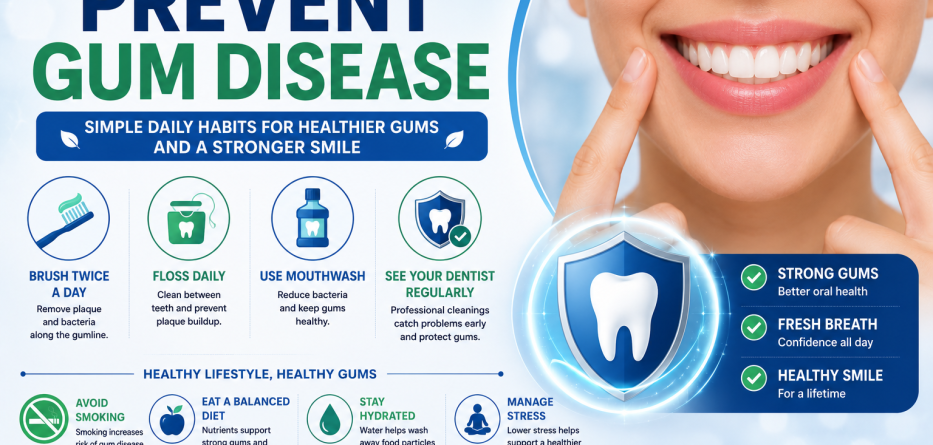
Gum disease is one of the most common oral health problems worldwide, affecting millions of people every year. Despite being largely preventable, many individuals develop gum disease due to poor oral hygiene, unhealthy habits, or lack of regular dental care. If left untreated, gum disease can lead to tooth loss, bone damage, bad breath, and even impact overall health.
The good news is that preventing gum disease is often simple with the right daily habits and professional care. By understanding the causes of gum disease and taking proactive steps, you can maintain healthy gums and protect your smile for years to come.
In this guide, we’ll explain what gum disease is, its warning signs, and the most effective ways to prevent it.
What Is Gum Disease?
Gum disease, also known as periodontal disease, is an infection of the tissues that support your teeth. It usually begins with plaque buildup along the gumline.
There are two main stages:
Gingivitis
The earliest stage of gum disease.
Symptoms include:
- Red gums
- Swollen gums
- Bleeding while brushing or flossing
- Mild discomfort
At this stage, the condition is usually reversible.
Periodontitis
Advanced gum disease that affects the bone supporting the teeth.
Symptoms may include:
- Receding gums
- Loose teeth
- Persistent bad breath
- Bone loss
- Tooth loss
Preventing gingivitis is the best way to avoid periodontitis.
What Causes Gum Disease?
The primary cause of gum disease is plaque.
Plaque is a sticky film of bacteria that constantly forms on teeth.
When plaque is not removed, it can harden into tartar, which irritates the gums and promotes bacterial growth.
Other risk factors include:
- Poor oral hygiene
- Smoking
- Diabetes
- Hormonal changes
- Stress
- Certain medications
- Poor nutrition
- Family history of gum disease
Understanding these risk factors is the first step toward prevention.
Why Is Preventing Gum Disease Important?
Healthy gums are essential for overall oral health.
Preventing gum disease helps:
- Preserve natural teeth
- Prevent tooth loss
- Reduce bad breath
- Protect jawbone health
- Improve overall well-being
- Lower the risk of costly dental treatments
Research also suggests links between gum disease and conditions such as heart disease, diabetes, and respiratory illnesses.
1. Brush Your Teeth Twice a Day
Proper brushing is one of the most effective ways to prevent gum disease.
Best Practices
- Brush at least twice daily
- Use a soft-bristled toothbrush
- Brush for two minutes
- Clean along the gumline
- Replace your toothbrush every 3–4 months
Electric toothbrushes may provide additional plaque removal benefits.
2. Floss Every Day
Brushing alone cannot clean between teeth effectively.
Daily flossing helps remove:
- Plaque
- Food particles
- Bacteria
Benefits include:
- Reduced gum inflammation
- Better gum health
- Lower risk of gingivitis
Consistency is key for effective prevention.
3. Use an antibacterial mouthwash.
An antibacterial mouth rinse can help reduce bacteria that contribute to gum disease.
Benefits include:
- Fresh breath
- Reduced plaque accumulation
- Improved gum health
Ask your dentist which mouthwash is best for your needs.
4. Schedule Regular Dental Checkups
Professional dental visits are essential for preventing gum disease.
During routine appointments, dentists can:
- Remove tartar buildup
- Identify early signs of gum disease
- Monitor gum health
- Provide preventive care
Most patients should visit the dentist every six months.
5. Get Professional Dental Cleanings
Even excellent brushing and flossing cannot remove hardened tartar.
Professional cleanings help:
- Eliminate plaque deposits
- Remove tartar
- Prevent gingivitis
- Maintain healthy gums
Regular cleanings significantly reduce the risk of periodontal disease.
6. Avoid Smoking and Tobacco Products
Smoking is one of the strongest risk factors for gum disease.
Tobacco use:
- Weakens the immune system
- Reduces blood flow to the gums
- Slows healing
- Increases plaque buildup
Quitting smoking greatly improves gum health and treatment outcomes.
7. Maintain a Healthy Diet
Nutrition plays an important role in oral health.
A gum-friendly diet includes the following:
Foods That Support Healthy Gums
- Leafy greens
- Fresh fruits
- Lean proteins
- Dairy products
- Nuts and seeds
Foods to Limit
- Sugary snacks
- Soft drinks
- Sticky candies
- Excessive processed foods
Balanced nutrition helps strengthen the immune system and supports healthy gum tissue.
8. Stay Hydrated
Drinking water helps:
- Wash away food particles
- Neutralize acids
- Support saliva production
Saliva is a natural defense against harmful oral bacteria.
Aim to drink water throughout the day.
9. Manage Medical Conditions
Certain health conditions can increase the risk of gum disease.
Examples include:
- Diabetes
- Autoimmune disorders
- Hormonal changes
Proper medical management can improve oral health outcomes and reduce gum-related complications.
10. Reduce Stress
Chronic stress may weaken the immune system and make it harder for the body to fight infections.
Stress management techniques include the following:
- Exercise
- Meditation
- Adequate sleep
- Relaxation techniques
Maintaining overall health contributes to healthier gums.
Early Warning Signs of Gum Disease
Recognizing symptoms early can help prevent serious complications.
Watch for:
- Bleeding gums
- Red or swollen gums
- Persistent bad breath
- Gum recession
- Tooth sensitivity
- Loose teeth
If you notice any of these signs, schedule a dental examination promptly.
Daily Gum Disease Prevention Checklist
Follow these habits every day:
✅ Brush twice daily
✅ Floss once daily
✅ Use mouthwash if recommended
✅ Drink plenty of water
✅ Eat a balanced diet
✅ Avoid smoking
✅ Monitor gum health
✅ Schedule routine dental visits
Small daily habits can make a significant difference over time.
Common Mistakes That Increase Gum Disease Risk
Avoid these common errors:
- Skipping flossing
- Brushing too aggressively
- Ignoring bleeding gums
- Missing dental appointments
- Smoking tobacco products
- Consuming excessive sugar
Addressing these habits can greatly reduce your risk.
Frequently Asked Questions
Can gum disease be prevented completely?
While no prevention method is guaranteed, maintaining excellent oral hygiene and regular dental care can dramatically reduce your risk.
What is the first sign of gum disease?
Bleeding gums during brushing or flossing is often one of the earliest signs.
How often should I floss?
Flossing at least once daily is recommended.
Does mouthwash prevent gum disease?
Mouthwash can help reduce bacteria, but it should be used alongside brushing and flossing.
Is gum disease reversible?
Gingivitis, the early stage of gum disease, is usually reversible with proper treatment and oral hygiene.
Can children develop gum disease?
Yes, although severe forms are less common. Good oral hygiene habits should begin early.
Conclusion
Knowing how to prevent gum disease is one of the most important steps you can take to protect your oral health. Consistent brushing, daily flossing, regular dental visits, a healthy diet, and avoiding tobacco products all contribute to strong, healthy gums.
Because gum disease often develops gradually, prevention and early detection are key. By adopting healthy oral hygiene habits today, you can reduce your risk of gum disease, preserve your natural teeth, and enjoy a healthier smile for years to come.